
· Nick · 4 min read

Dev Log 4: Building and Animating the Luminids
This week the focus was on the actual creation of the Luminids themselves. Model work, rigging, animation tests, and trying to lock down how these creatures look and move in the game. This is the first time Luminids have started to feel like real characters instead of placeholder blobs.
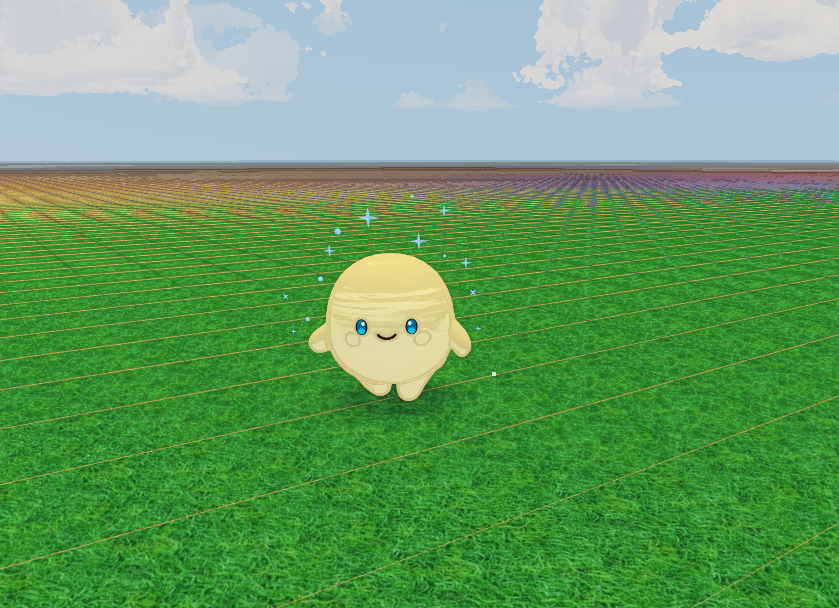
This week the focus was on the actual creation of the Luminids themselves. Model work, rigging, animation tests, and trying to lock down how these creatures look and move in the game. This is the first time Luminids have started to feel like real characters instead of placeholder blobs.
Defining the Luminid Shape
The start of the week was spent refining the base body shape. Luminids are simple silhouettes, so small adjustments matter more than you’d think. A smoother head curve, slightly wider base, shorter arms. Everything changes the personality.
The goal was to find a balance between:
- readable at small sizes
- expressive in motion
- easy to animate
- distinctive without extra detail
It was solved by keeping the body a single unified mesh with soft, rounded forms. No harsh angles. No complexity. The simplicity actually forced better decision-making.
Rigging the First Luminid
Once the model was locked in, the work moved into rigging in Blender. A minimal bone setup was used. The rig only needs:
- head control
- spine bend
- arm flaps
- body squash and stretch
The trickiest part was getting deformation to feel smooth. The mesh is very soft, so better weight painting was needed to avoid dents and pinches when the body squashes.
A few constraints were also tested for secondary motion. Even a tiny rotation offset on the head makes a big difference. Makes the Luminid feel curious instead of robotic.
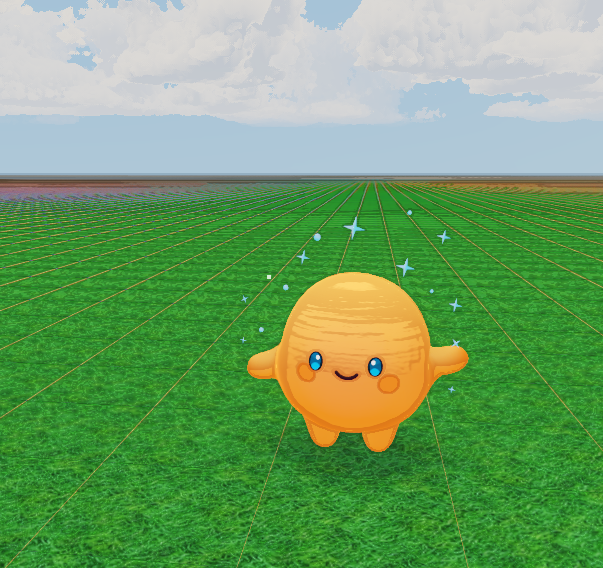
Animation Tests
A few core animations were built out:
Idle
A slow breathing motion with micro-sways. Enough movement to look alive, but not distracting.
Walk
This one took the most time. Luminids don’t have legs, so the movement relies on:
- body bob
- arm float
- glide-like forward motion
A bounce cycle was tested vs. a hover cycle. The bounce cycle felt more friendly, so it was kept.
Look Around
Just a simple head tilt with small rotations. This one gives the most personality for the least effort.
Glow Pulsing
Shader-based glow pulsing was experimented with in Godot. The animation sends a signal to the shader, letting the Luminid brighten during idle or when it notices something.
Even this tiny detail makes the character feel more alive.
Bringing Them Into the World
Once the first animated Luminid was dropped into the game world, everything clicked. Even simple idle/walk cycles completely change the feel of the scene. A static world becomes a living one as soon as something moves inside it.
What’s surprising is how well the animations read at distance. The squash and stretch body motion carries even when the character is tiny on screen.
What’s Next
The Luminids now have:
- a finished model
- a clean rig
- basic animation set
- working in-engine imports
Next steps include exploring:
- a more expressive “surprised” animation
- float/hover variations for different personalities
- better glow syncing between animation and shader
- testing how multiple Luminids look together in groups
This is the first week where they actually feel like characters and not prototypes. Seeing them move in-game is a big step forward.
More updates soon.
Nick
Get updates via Steam
If this dev log clicked with you, the biggest way to support is a wishlist.
 Get updates via Steam