
· Nick · 4 min read

Dev Log 7: Harvesting & Inventory
Chop, carry, store, repeat. A first pass at harvesting and inventory that turns the world into a playable loop.
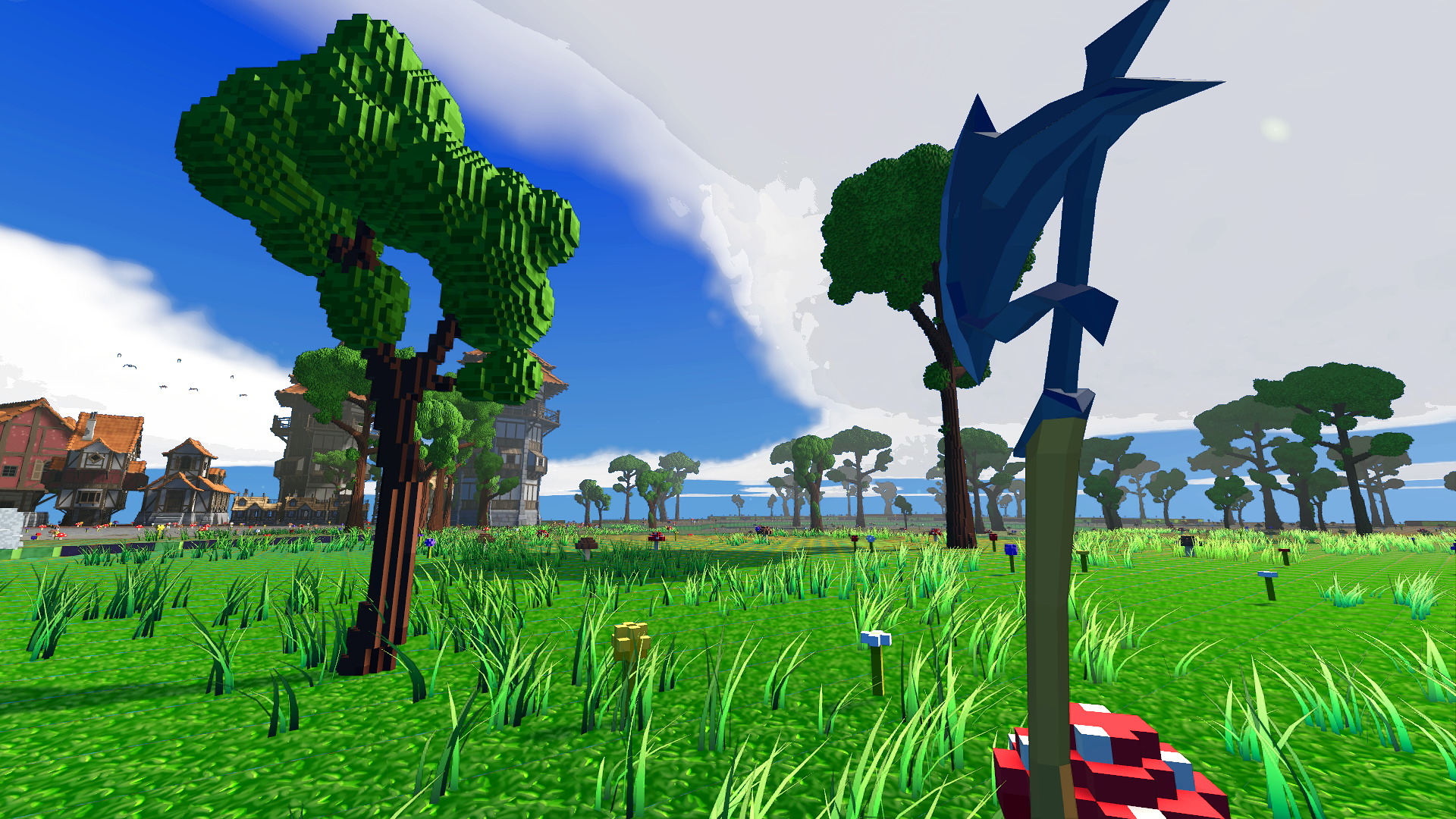
What “harvesting” actually means in Luminids
The goal is to have Luminids notice resources, decide to gather them, carry them somewhere, and then use them for the next thing, with this: the world changes.
I am not aiming for a survival grind.
Harvesting in Luminids is closer to gentle world-tending. You shape the space, place a few incentives, and the Luminids respond. The loop is meant to feel:
- legible, so you can usually see what is about to happen
- soft, without frantic micromanagement
- alive, because they make choices rather than just follow orders
The goal is not pressure. It is momentum.
The first resource pass
Right now the system supports a very small and intentionally boring set of resources:
- Wood from trees, driftwood, and deadfall
- Stone from rocks and boulders
- Fiber from grass patches and reeds
The goal is proving the system from end to end.
Find. Reserve. Harvest. Carry. Store. Consume.
Once that loop works, everything else can grow on top of it.
The harvest loop (early draft)
- Scan nearby resource nodes within a soft radius
- Pick a target based on distance, need, and a simple sense of interest
- Reserve it so multiple Luminids do not pile onto the same tree
- Perform the action itself, chopping, mining, or gathering
- Spawn a stackable item result
- Carry it to the best known storage point or a temporary pile
Inventory: small pockets, big effects
The inventory system is minimal on purpose.
- Luminids have a small number of slots.
- Each slot holds a single resource type.
- Stacks have a cap, so storage actually matters.
This does two things straight away.
First, hauling becomes a real activity rather than a teleport. Second, natural village shapes start to appear as piles form near where work is happening.
The world begins to organise itself without being told how.
Storage: piles first, buildings later
Before building a proper warehouse UI, I want the world to show what is happening.
So the first storage implementation is physical:
- Items land in visible piles.
- Piles merge when they are close enough, so clutter stays manageable.
- Later buildings will really just be piles with rules.
You can walk around the settlement and see where effort is being spent. That honesty matters to me.
The part I care about most: intent
The difference between a task system and a living system is why something gets chosen.
The current implementation uses simple weighting, but it is already heading in the right direction:
- Harvest because you are nearby
- Harvest because the settlement needs it
- Harvest because it is what you were already doing
Long term, that last one matters most. Continuity. Momentum. Habit. That is where characters start to feel real.
What’s next
To evolve this looop, the next steps are:
- Crafting recipes that turn stacks into structures and tools
- Priorities that act as gentle nudges.
- Better storage rules around what goes where and why
- UI that stays out of the way but still lets you read the flow
Thanks for reading. More soon.
Nick
Get updates via Steam
If this dev log clicked with you, the biggest way to support is a wishlist.
 Get updates via Steam