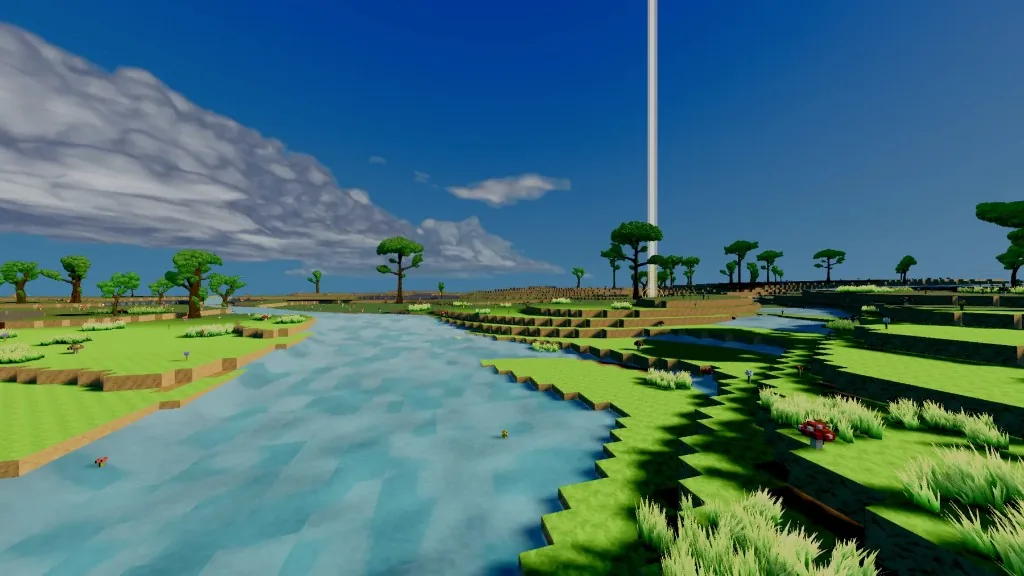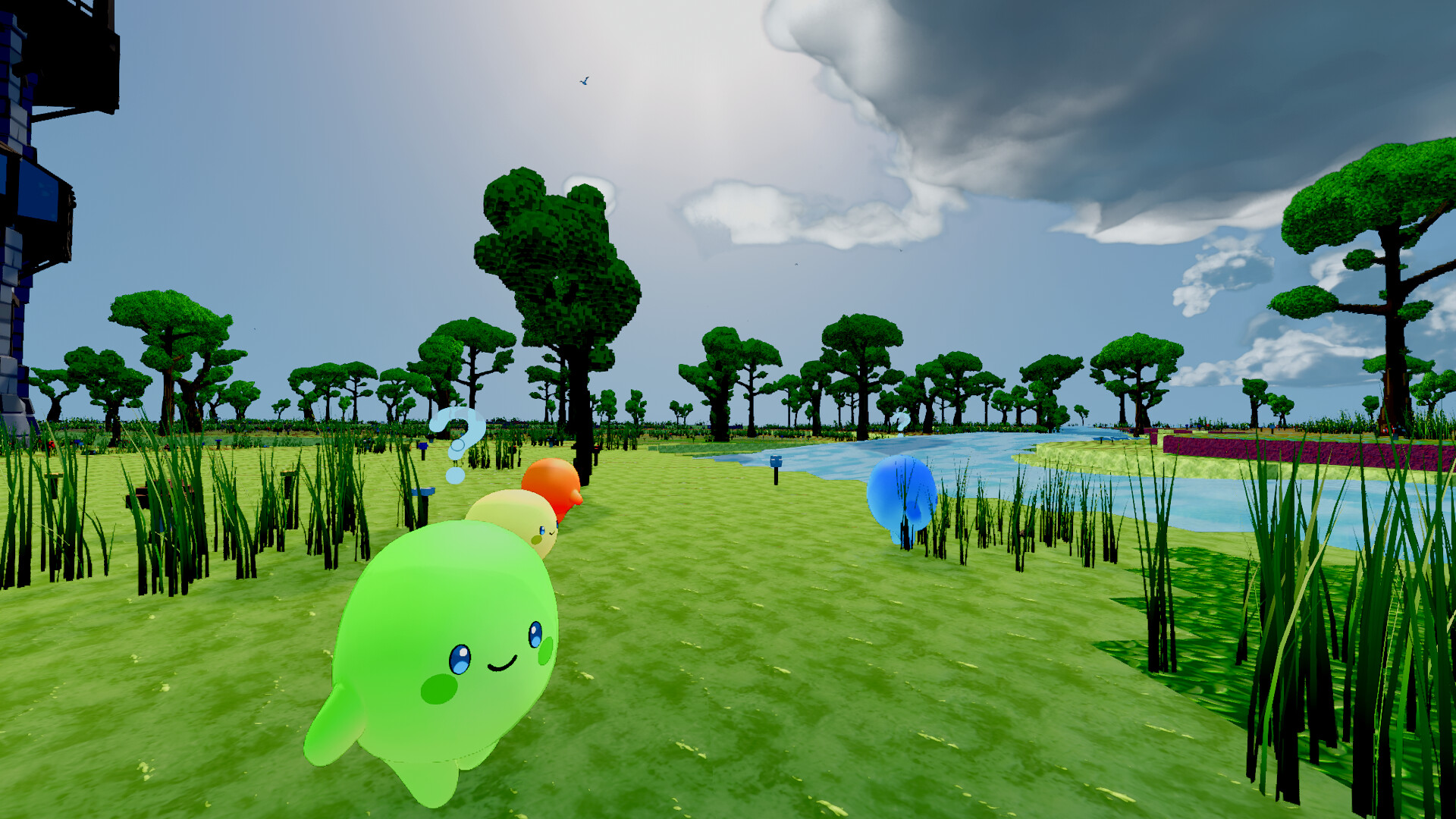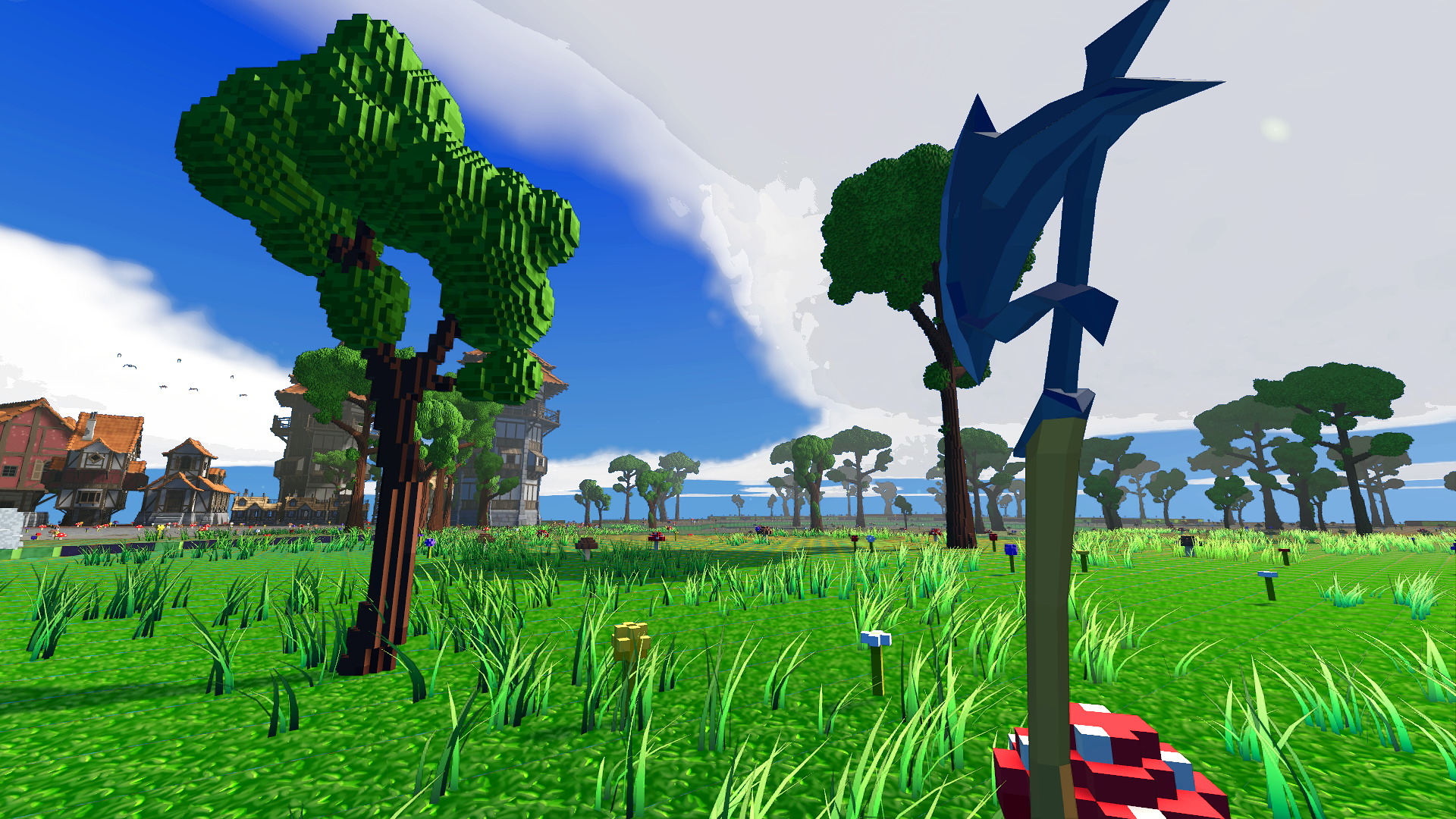


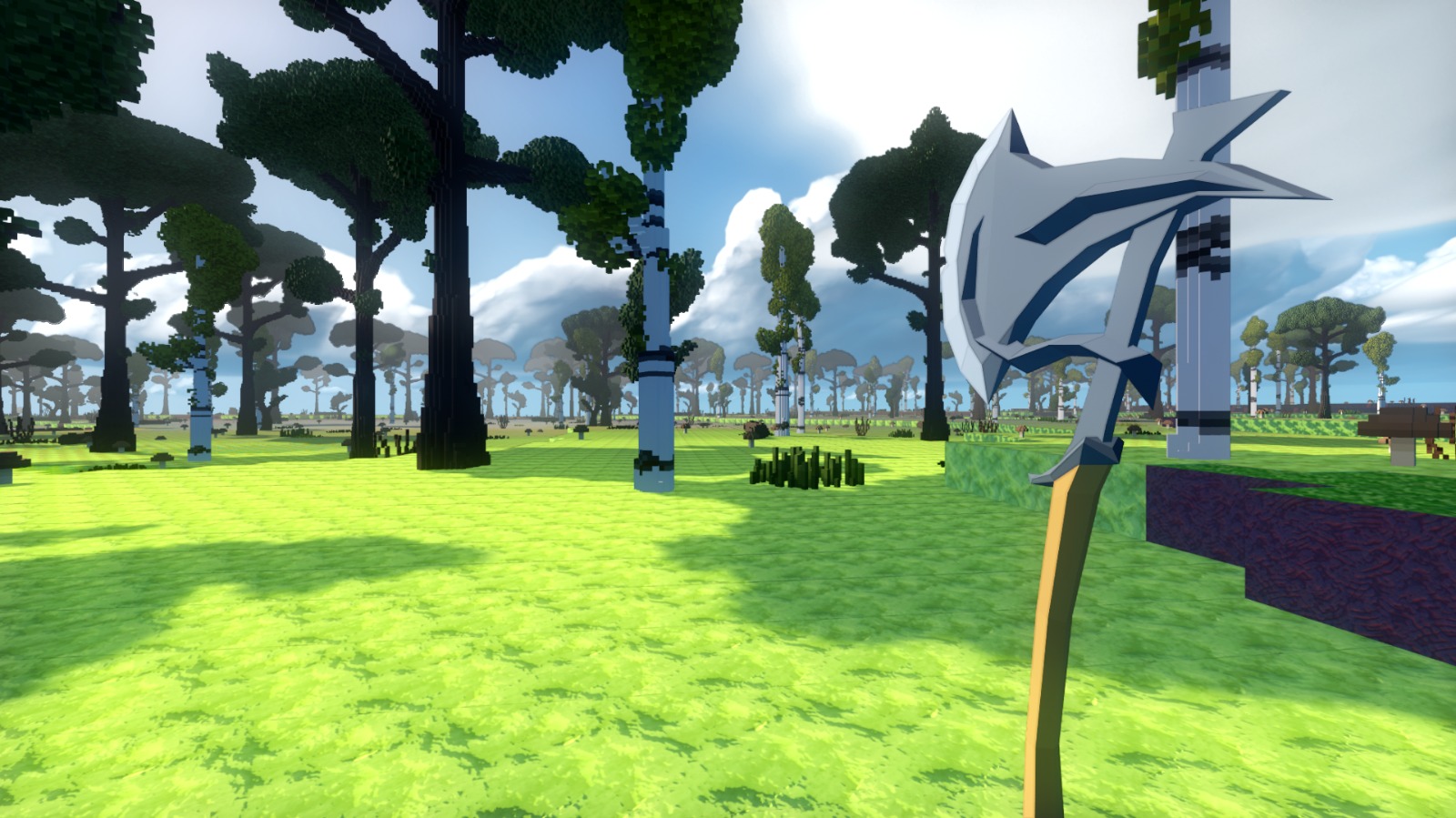
This week was about cohesion rather than expansion.
Instead of adding new features, I focused on the sky system and how it behaves over time. Clouds, lighting, and the day night cycle are not decorative layers in Luminids. They are part of the world’s underlying rhythm, and when they feel unstable, everything below them feels slightly off.
The goal was not to create standout moments like dramatic sunsets or heavy contrast. It was to make the sky behave consistently and predictably so the world feels calm, readable, and alive as time passes.
How the sky system works
The sky is now treated as a continuous progression rather than a set of states.
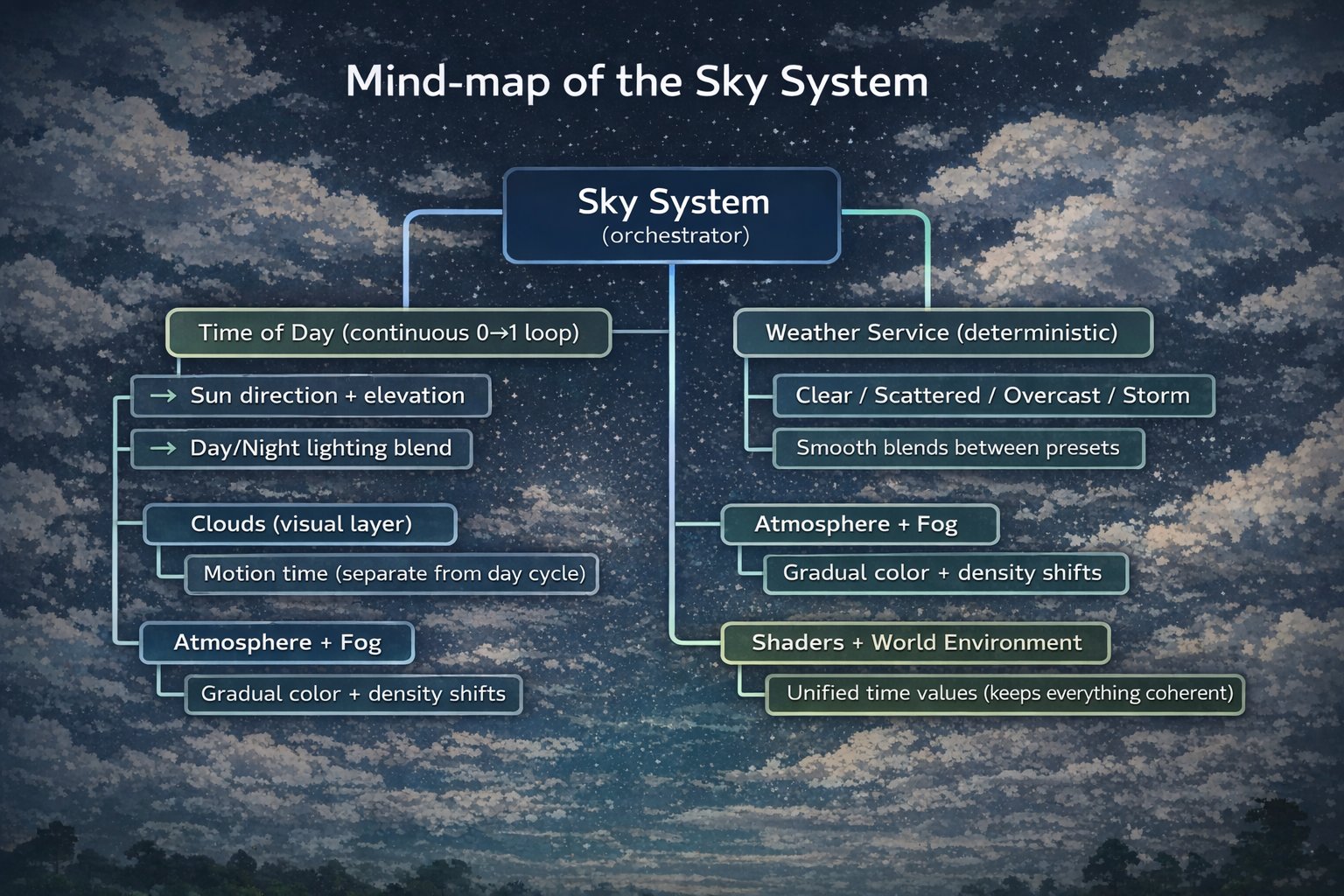
The sky is not a collection of separate effects. It is one continuous system that updates every frame and keeps everything in sync: time of day, sun position, cloud motion, fog, and atmosphere.
At the center is a “Sky System” controller. It owns the clock, pushes a unified time value into shaders, and gently blends all other sky parameters toward their targets so nothing snaps. This is why the sky feels calm because every change is softened into a smooth transition rather than a hard switch.
Weather is handled by a separate “Weather Service” that runs on a deterministic loop. It picks a weather state (clear, scattered, overcast, storm), then blends toward it over time. That means the sky can change mood without ever becoming chaotic or jumpy.
Cloud motion is also decoupled from the day/night clock. The sky can slow down or speed up time without the clouds suddenly racing across the world, so the sense of scale remains steady.
- Advance time (if the time cycle is running) using the world's time scale.
- Publish a single time value to shaders so sky, fog, and clouds stay unified.
- Update sun direction and elevation based on that time.
- Apply sky state (lighting, fog, cloud coverage, atmosphere).
- Blend toward target values so transitions feel continuous.
- Update cloud rendering so the view never "pops" when the camera moves.
This is the technical reason the sky now behaves as a continuous progression.
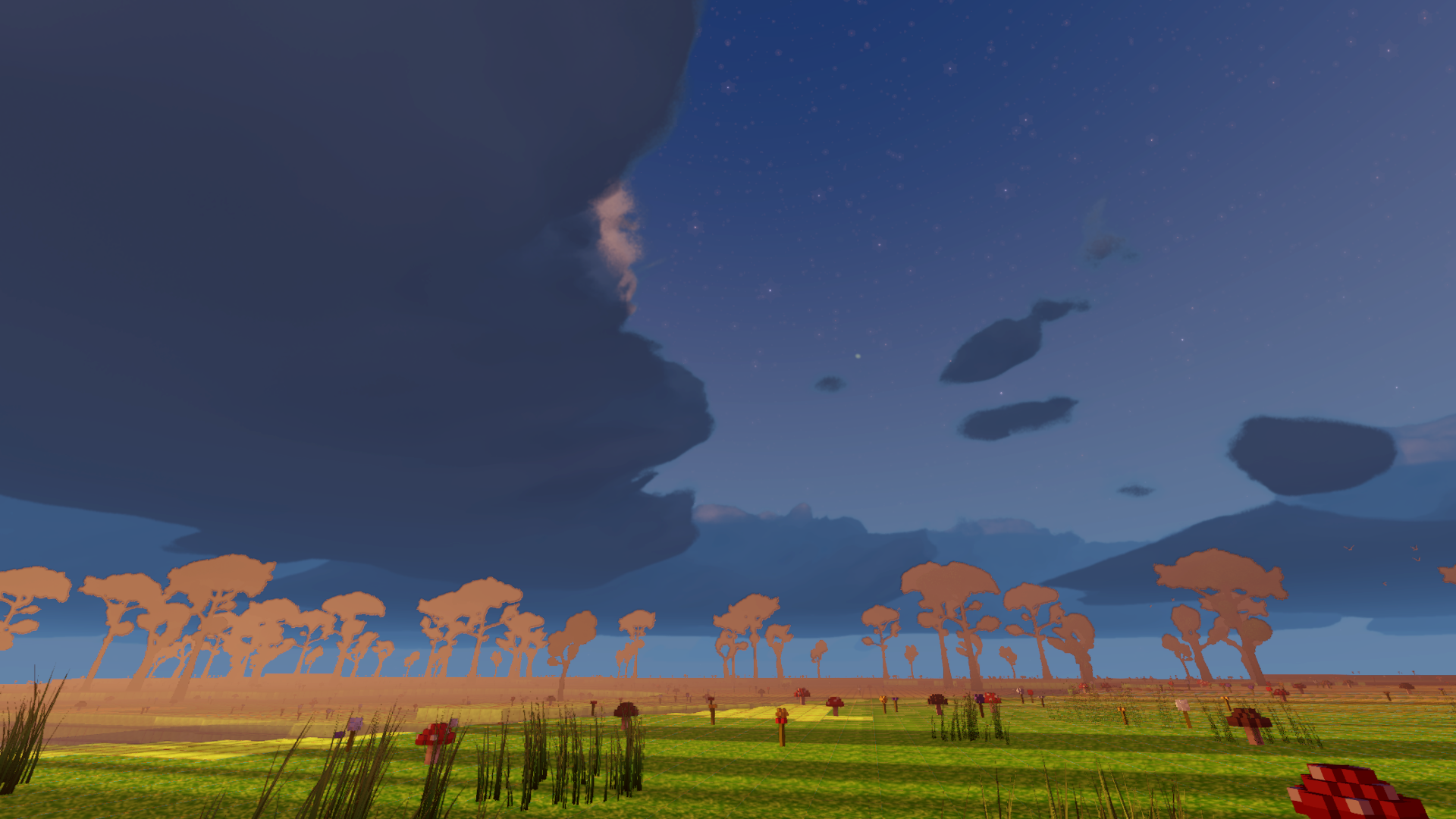
Clouds form, shift, and dissolve smoothly. Light temperature and intensity change gradually. Dawn and dusk feel like natural transitions instead of switches. Nothing snaps or pops. Everything flows from the same underlying state.
When systems behave continuously, the world feels believable even when you are not paying attention to it directly.
Why this matters
Luminids is built around systems that reinforce each other. When one layer is noisy or inconsistent, it creates friction everywhere else.
By stabilising the sky, a lot of downstream work becomes easier and cleaner. Lighting becomes easier to tune. Atmosphere becomes more predictable. Performance becomes more stable. Visual noise reduces naturally rather than through manual fixes.
This mirrors how other systems in Luminids are designed. Simple rules, applied consistently, produce behaviour that feels intentional without being scripted.
Calm as a design constraint
One of the guiding constraints here was calm.
The sky should support play, not compete with it. It should create mood without demanding attention. You should be able to look up and enjoy it, but also ignore it completely while everything still feels right.
That constraint shapes everything from cloud density to colour balance to how contrast is handled during transitions.
The result is not a more dramatic sky. It is a more trustworthy one.
Day and night cycle
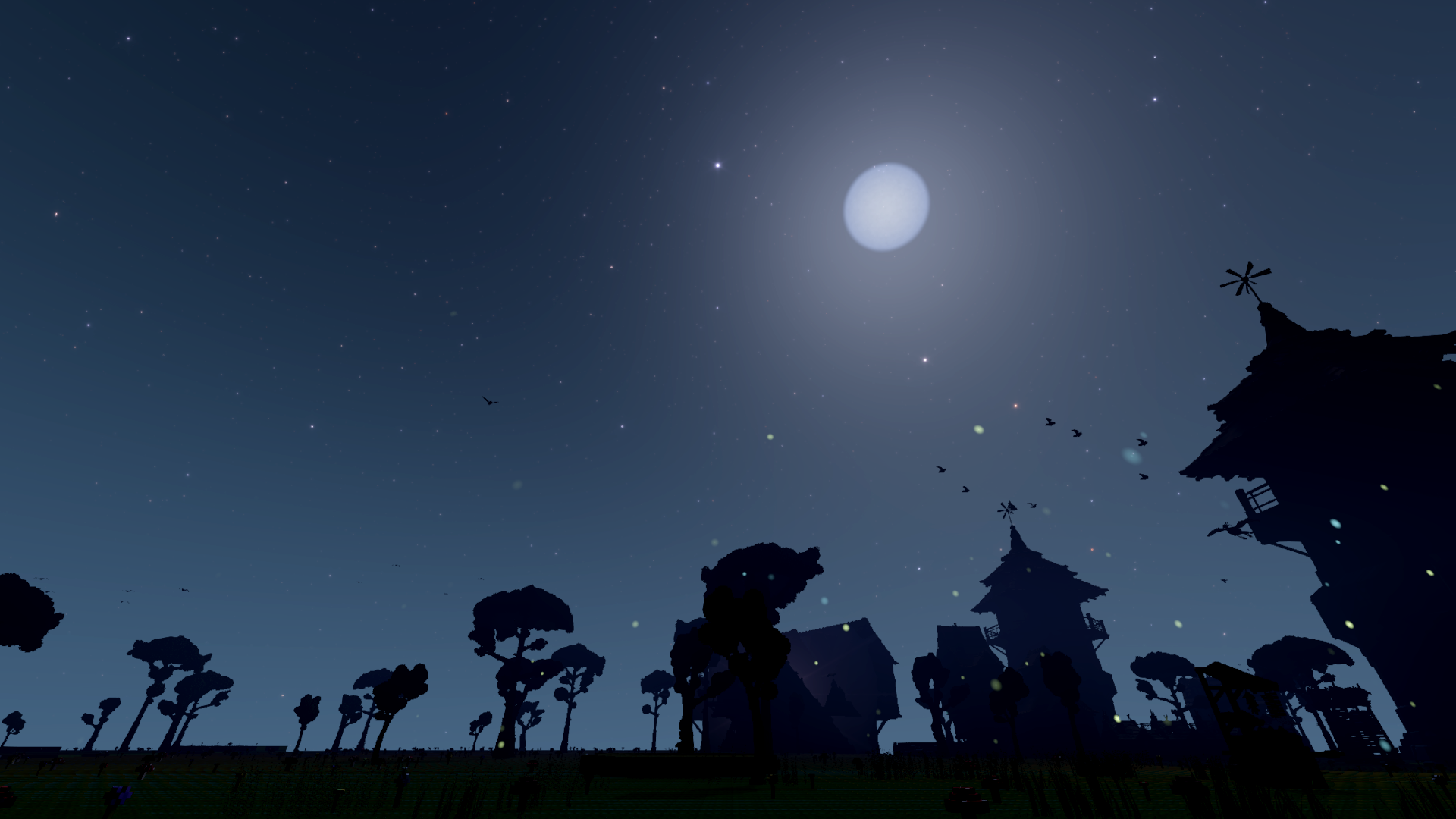
The day night system now keeps its rhythm while the sky stays coherent. The light shifts, the clouds respond, and the scene holds together without abrupt changes.
What this changes in game
When you step outside now, the world feels more settled.
Light behaves as you expect it to. Time passes gently. The environment feels like it has a steady pulse rather than a collection of effects layered on top of each other.
It is a small change on the surface, but a foundational one underneath.
What comes next
With the core sky and transition system behaving predictably, it becomes a stable base for future work. Weather, mood shifts, and deeper environmental cues can now be layered on without fighting the system underneath.
- Rain: Light to heavy rain that softens light and darkens surfaces.
- Fog: Low, rolling fog that shifts visibility and depth.
- Sunny and cloudy days: Clear or scattered cover.
- Sand storms: Muted color and reduced visibility as sand moves through.
- Snow: Colder light, quieter ambience, softened landscape.
- Heatwaves: Subtle haze, brighter light, still air.
As with most things in Luminids, this work is less about adding more and more about making what is already there feel whole.
More soon.
Nick