


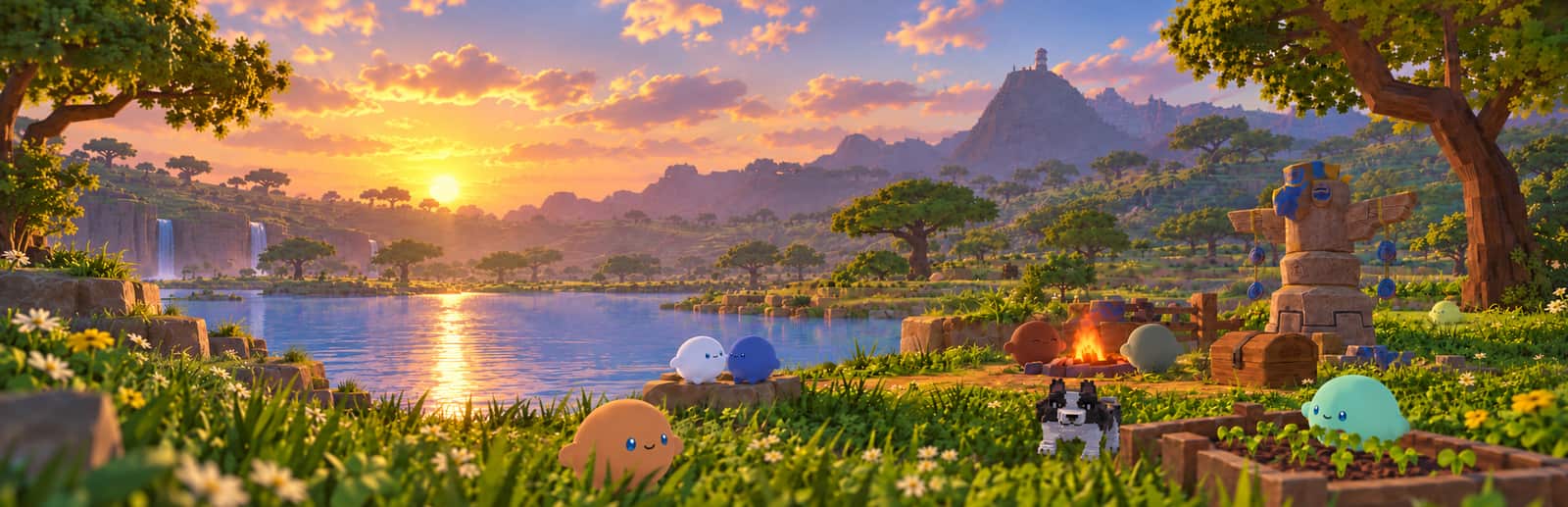
A cozy colony sim, honestly described
There are a lot of games in this space and most of them describe themselves the same way. Here is what Luminids actually takes from the genre, what it deliberately refuses, and who it is not for.
"Cozy colony sim" covers an enormous range now, from gentle farming games to fairly ruthless settlement management with a soft art style. It is a genuinely useful label and a nearly useless description. So this page is the specific version.
The short version
Luminids is a colony builder where you are a landscaper and a neighbour rather than a manager. You change the world; the creatures respond to it. You are never issuing orders, and you are never at risk.
What it does and does not do
You shape the world and set intent. The Luminids decide what to do about it. There is no order queue and no unit selection.
Never. Not from hunger, cold, accident, or neglect. This is a hard rule, not a difficulty setting.
No enemies, no raids, no seasons that punish you, no timers. Tension comes from want, not risk.
Farming, fishing, cooking, mining, and crafting exist and matter, but the game is not an optimisation puzzle.
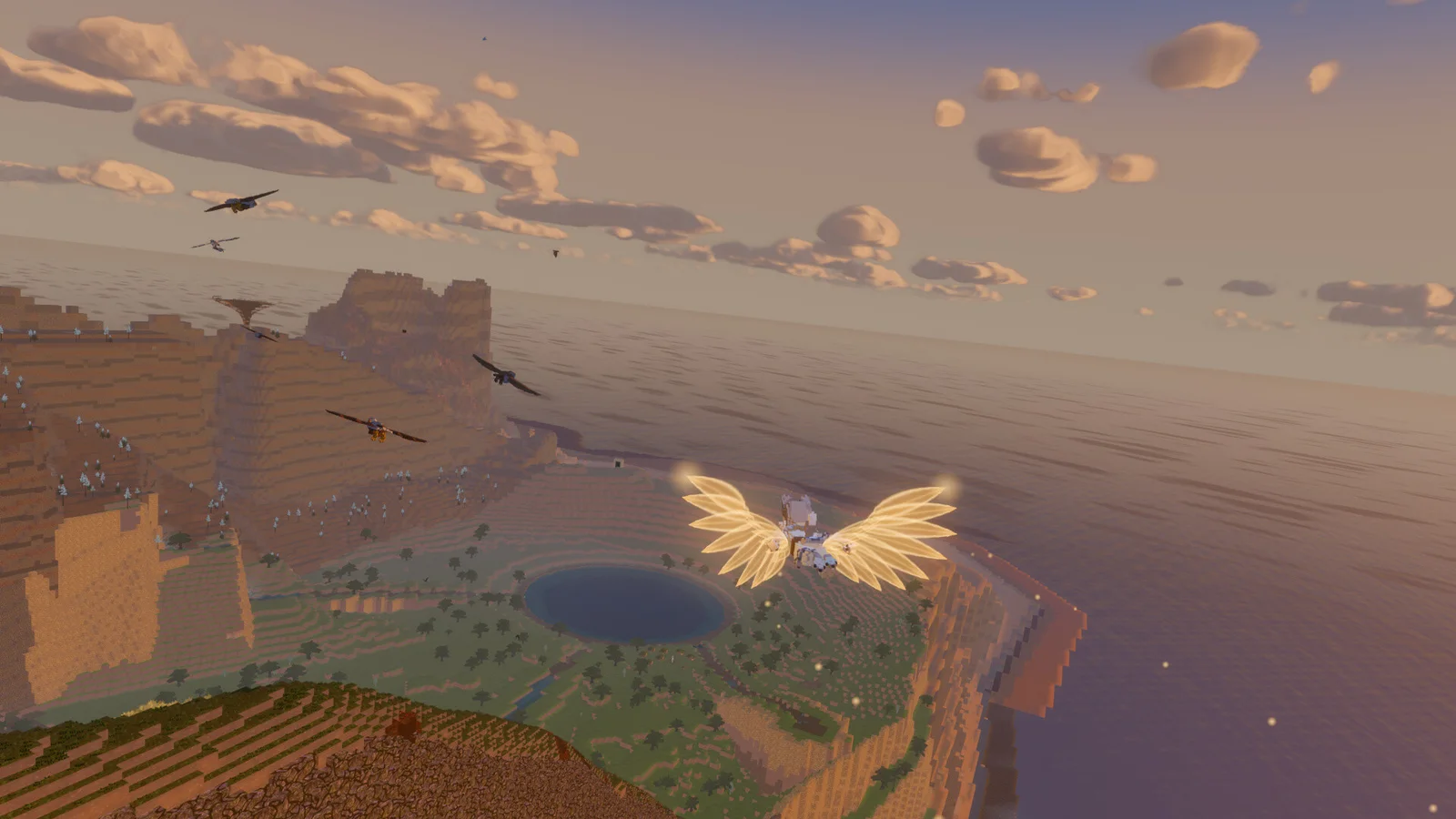
Voxel land you raise, lower and carve. Paths follow the ground rather than flattening it.
Drop out of the planning view and walk the same world at ground level, any time.
Earned traits, moods you can read without a menu, friendships, and a growth arc that is not a level bar.
Online co-op for 1 to 4 players on the same island. Purely cooperative, since there is nothing to compete over.
If you liked the genre for these reasons
…watching a settlement grow without micromanaging it
This is the closest match. The whole design pushes toward setting conditions and then watching what happens, and the colony gradually takes verbs off your hands as the game goes on. Farming, for example, graduates one step at a time: first they water what you planted, later they replant it, and eventually they take the harvest entirely. You never lose the ability to do it yourself.
…colonists who become characters you remember
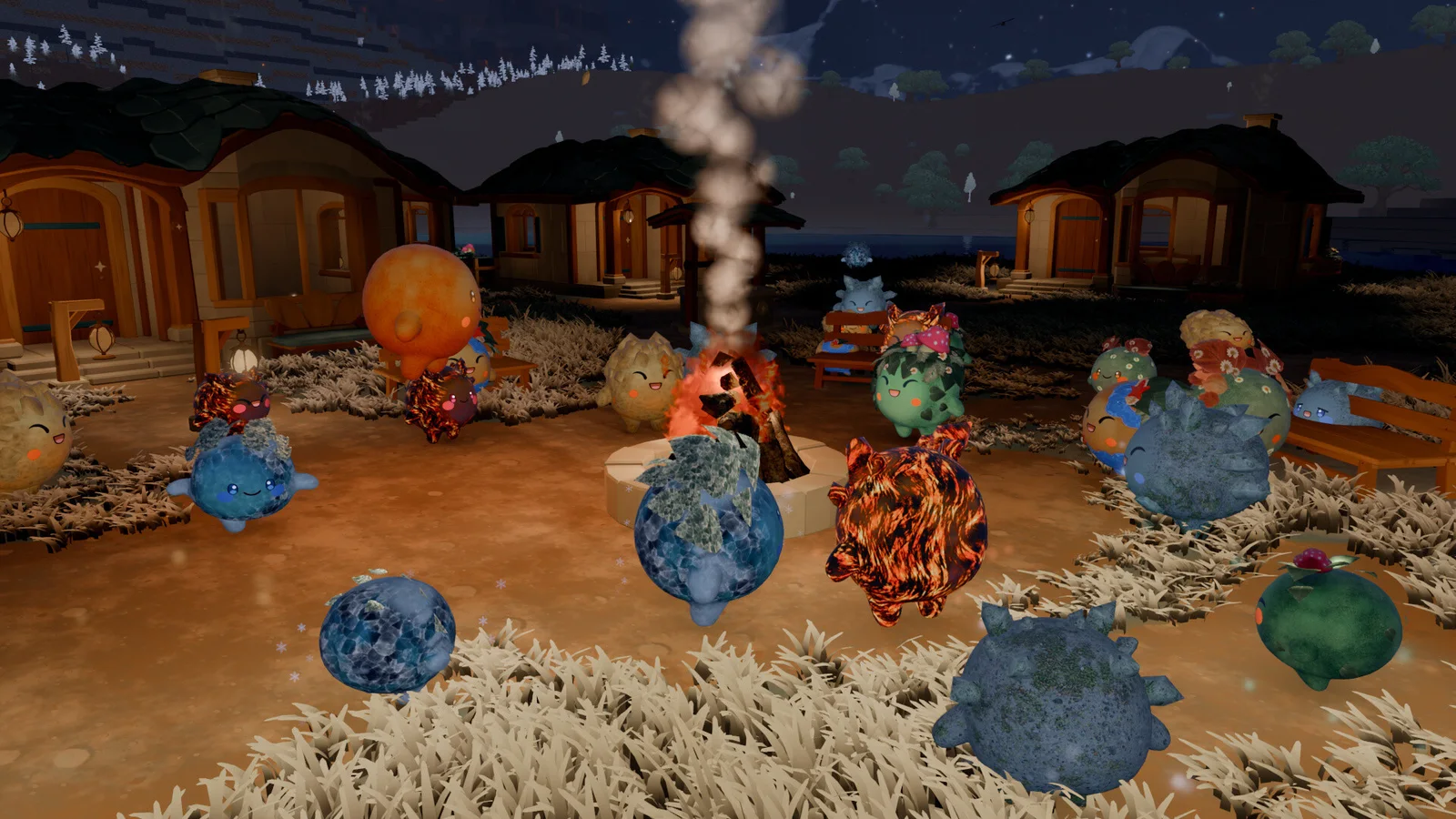
Also a strong match, and it is the thing we have spent the most time on. Traits are earned rather than rolled at spawn, so a Luminid's personality is a record of what it actually did. Moods are readable at a glance without opening a panel. They form real bonds with each other. Dev Log 16 and Dev Log 17 cover this in detail.
…terrain you can genuinely reshape
Match. The world is voxel land you raise, lower, and carve, and structures and paths respect the ground rather than flattening it into a build plane.
…difficulty, optimisation, and mastering a system
Honestly, not a match. There is no difficulty setting, no failure to avoid, and no build order to solve. If the pleasure you want is the pleasure of getting good at something adversarial, Luminids will feel thin to you, and we would rather you knew that now than at refund time.
…very long, very deep production chains
Partial match. There is real crafting, mining with meaningful depth tiers, farming and cooking, and a seven-stage campaign structure your colony physically builds. But the systems are there to give the colony something to do together, not to be an economy to solve.
The two things that are genuinely unusual
The perspective switch. Plenty of games have an overhead view and plenty have first person. Having both, over the same world, at the same fidelity, changes what building means. You stop designing a layout and start designing a place you will have to stand in.
Refusing to draw the bar. Wariness, trust, mood and progress are all real numbers in the simulation and almost none of them are shown to you as numbers. You read a creature by how it behaves. This is harder to build and slower to communicate, and it is the reason the game feels the way it does.
Who this is not for
- Players who want a challenge to overcome. There isn't one, by design.
- Players who want competitive or large-scale multiplayer. Co-op tops out at four, and there is nothing to compete over.
- Players who want it now. Early Access is planned for February 2027.
- Players on very old hardware, at least today. Performance is our largest open project.
Who it is for
People who want somewhere to be. Who like a game they can leave for twenty minutes without consequence. Who get more out of naming a creature than levelling one. Who want to build something and then go and stand in it.