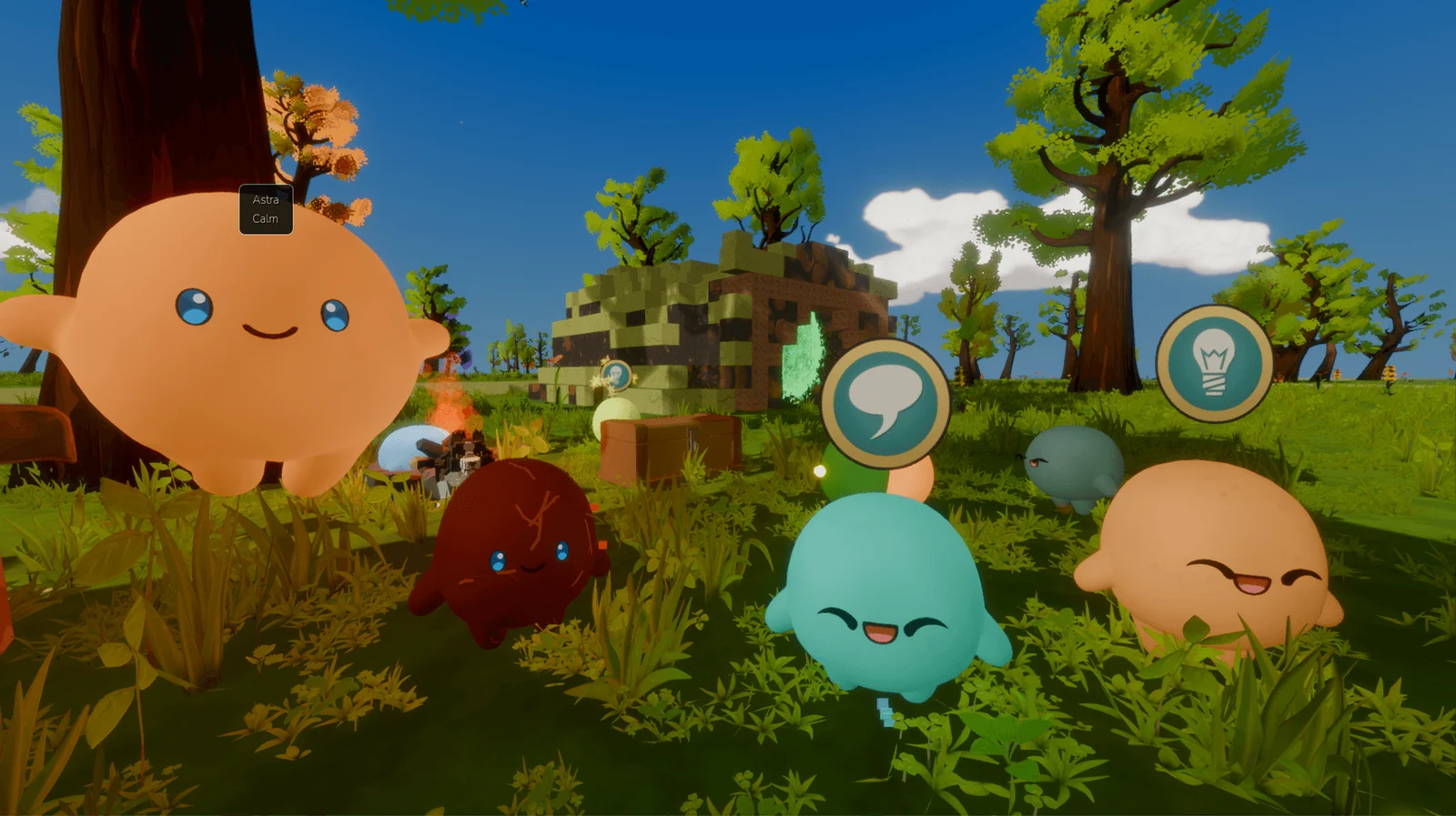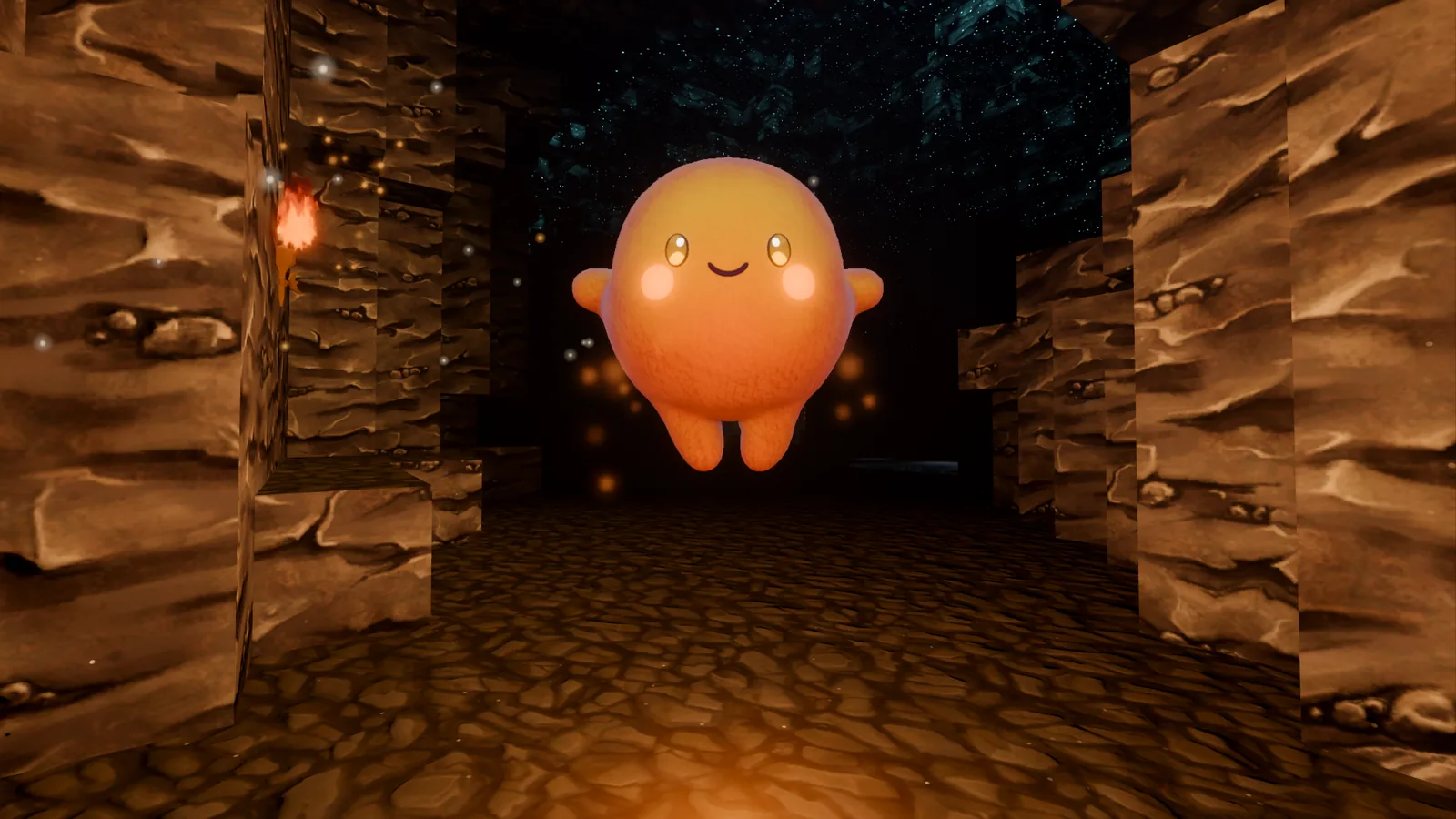


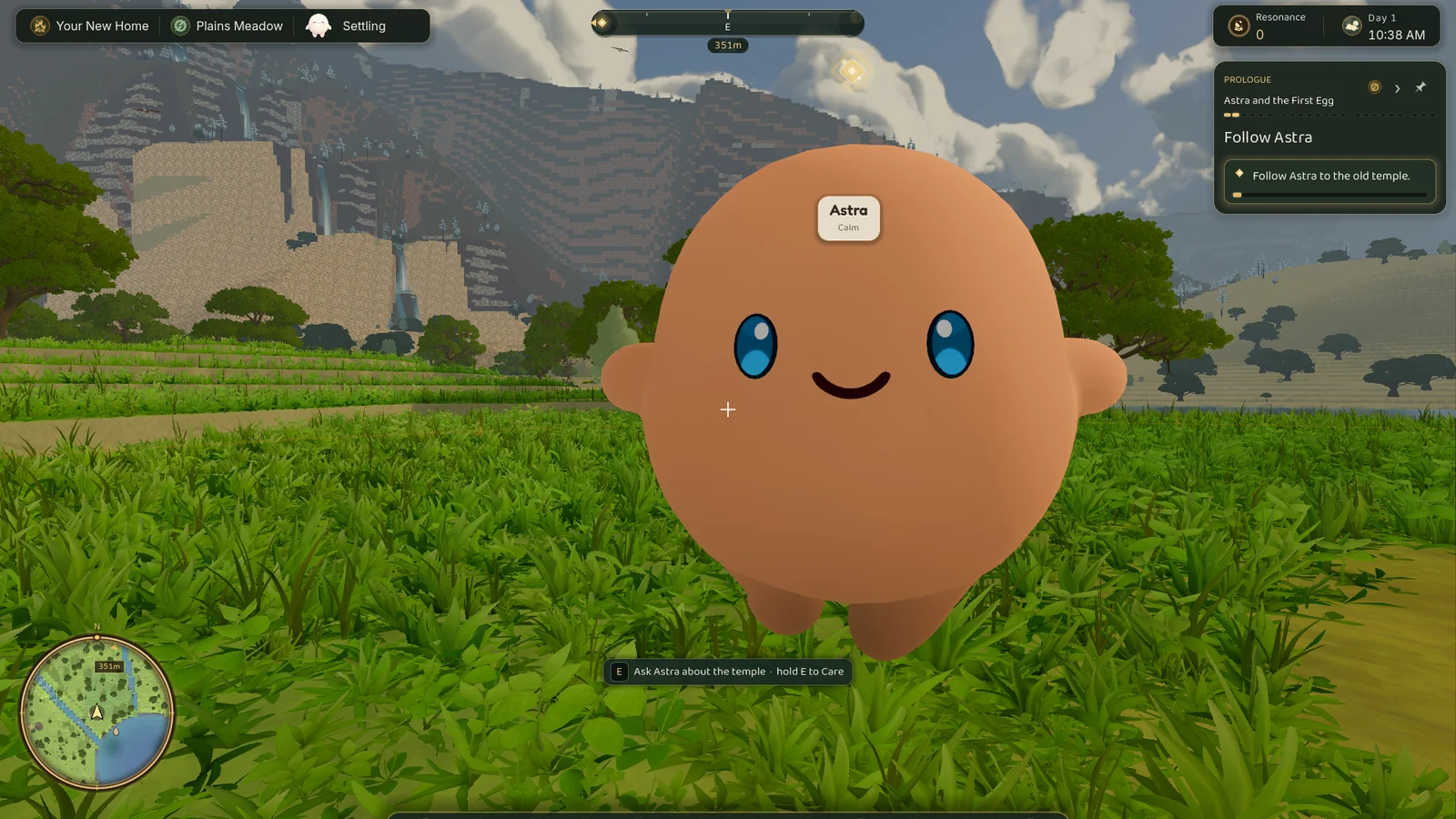
Last month I wrote about a colony that feels something. This month we opened up the thing that does the feeling and replaced it.
That sounds reckless when I put it like that. It was the right call, and July was the month Luminids stopped being a game with clever creature code in it and started being a game about creatures.
We took the brain out and put a new one in
Since almost the beginning, every luminid ran on a behaviour tree. Behaviour trees are great at one thing: making a creature do the next sensible action. They’re quietly terrible at the thing I actually needed, which is a creature that’s in a state of being and can be interrupted, persuaded, distracted, or invited into a ceremony without the whole tree falling over.
So in early July we deleted it. All of it. The addon, the controller, forty four actions, thirteen conditions, two autoloads, and about two hundred and forty legacy test files that only existed to prove the old thing worked. In its place, a hierarchical state machine, and a single host object that absorbed the shared core the old controller had been hoarding: needs, jobs, work, movement, personality, presence, recovery, the lot.
The point wasn’t tidiness. A luminid now has one place where its life is decided, so a ceremony can politely ask it to come and sit down, and the luminid can say yes without its job queue exploding.
Then I watched them for ninety minutes and found two horrors
Green tests are evidence. They are not a verdict. So before the old system was allowed to die, we ran a soak: a real colony, a real save file, real in-game days, hours at a time, thirteen processes going at once, and someone reading the logs like they were a diary.
No crashes. No corruption. Save files round-tripped faithfully across reloads and autosaves. Memory stayed bounded. And in daylight the new colony was measurably livelier than the old one, visibly changing what it did as the day went on.
Then night fell, and the entire unsheltered colony froze solid at 22:00 and stayed frozen until 06:00.
The second one was worse in a quieter way. If a luminid had a need it couldn’t satisfy (water in a camp with no water, food in a camp with no food), it had no way to give up and do something else. It just stood there. Forever. Not idling. Not sad. A statue, burning four to eight times the normal thinking cost while doing nothing at all, and dragging the frame rate down about a third with it.
Both were bounded. Neither would crash your game or eat your save. But you’d have hit both on night one of any camp you built away from water, and you’d have felt something break in the world without ever knowing why.
They’re fixed. A blocked need now yields and retries on a backoff. Night no longer treats “I am outside” as an emergency. But I’m telling you about them because they’re the real lesson of the month: the tests said the migration was done, and watching said it wasn’t.
A beginning, a middle, and an end
Here’s the design commitment I made in July. I want it on the record so you can hold me to it.
There is no XP in this game. There will never be XP in this game. No levels, no bars, no “Luminid reached level 4”. A luminid grows through the quirks it earns, the relationships it forms and what it manages to make sense of. That’s the whole progression system.
But a life needs a shape, and a shape needs an ending. So there’s now an arc, and it has three parts.
The beginning is arrival. A light hatches nameless. You name it. Both of those are recorded in its ledger with the actual in-game date attached, so its biography can honestly say “Hatched into the world. Day 2.” If you rename it later, that becomes a new dated entry rather than quietly rewriting its past, because being renamed is a thing that happened to it.
The middle is just living. Working, playing, bonding, getting curious about things.
The end is called Becoming, and a luminid reaches it when four things are true at once:
- It has earned at least three of its quirks. One trait is a fact, two is a coincidence, three reads as a personality.
- It has one deep bond. Becoming someone needs someone else who matters.
- It has contributed to one real build for the colony. Not many. One. The question is “did you help raise the home”, not “how many walls”.
- It has built up enough meaningful experience to have a story that holds together, and routine work alone can’t get it there.
When all four land, the colony recognises it, and its ledger gets one line: “Stepped into their own light.”
And then nothing switches off. Becoming means fully realised, not finished. It keeps discovering quirks, keeps making friends, keeps living. The arc ends; the creature does not.
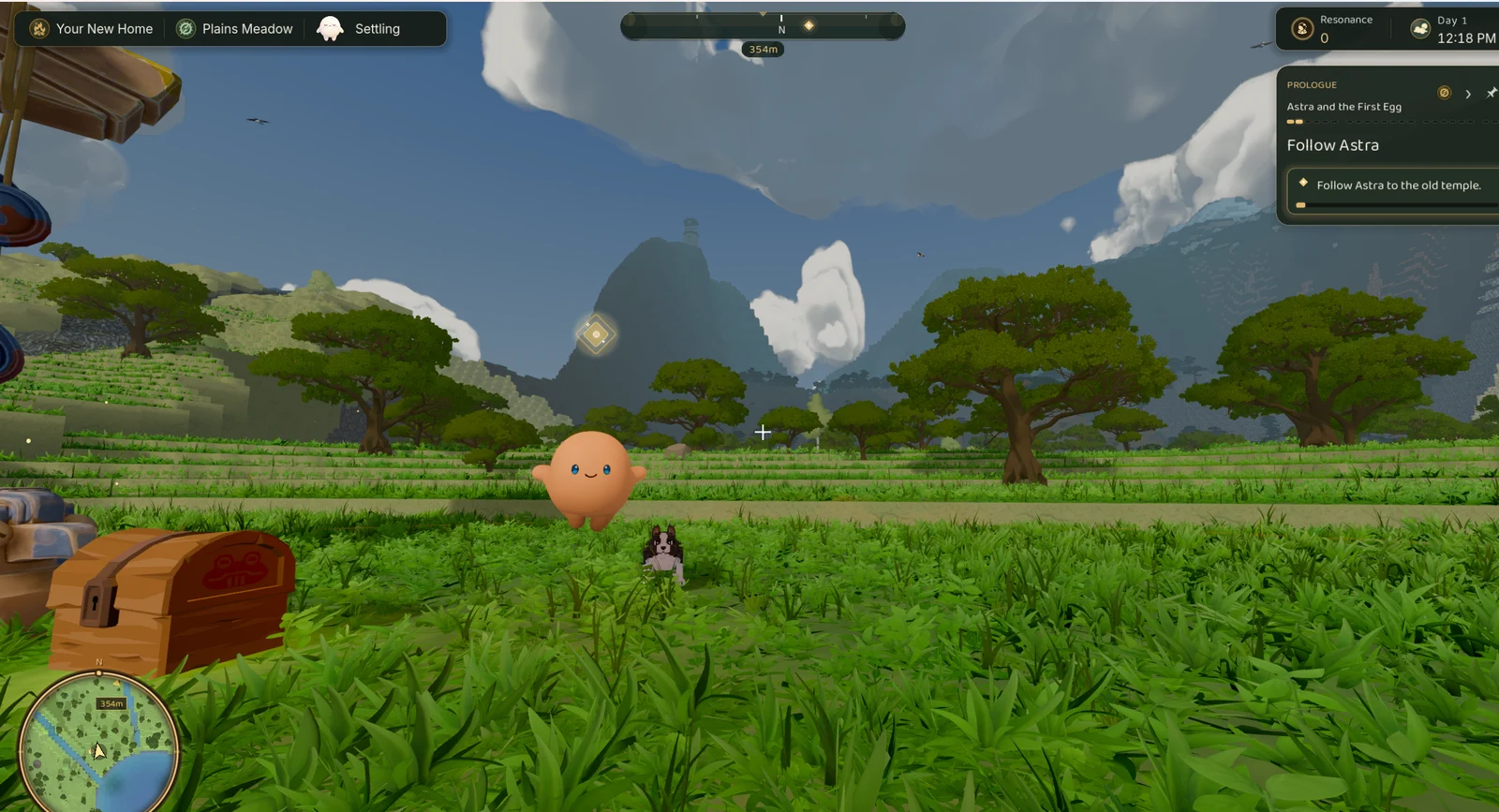
Quirks that actually change what they do
A trait that only shows up as a chip in a menu is a lie. In July all seven of them became real behaviour:
Curious Explorer investigates things, and investigating is also how it gets earned, so the trait and its cause are the same loop. Deep Focus genuinely resists interruption mid-task. Night Owl and Early Bird have real hours, so your colony wakes up staggered instead of all at once like a switch flipped. Aquaphile actively prefers work near water and is contented by being near it. Dancing Spirit dances at gatherings. Happy Worker hums, out loud, and you can hear it.
None of these are assigned. All of them are earned by doing the thing, ten times, or five, or for thirty minutes. So if your colony’s personalities are different from your friend’s, it’s because your two colonies lived different lives.
The gathering, and the gap in the circle
Before July, the night ceremony was a Night Council: an earnest little woodland parliament that met after dark and discussed the day. I love it, and I nearly threw it away for something flashier. Then I course-corrected, hard, and the right answer turned out to be: keep the parliament, and give it light.
So now, as the sun drops, luminids drift toward the grove circle in ones and twos, glowing brighter as the daylight fails. They settle into a ring. The council still speaks its minutes, still discusses the actual day that actually happened.
And if you walk up, the circle notices. Heads turn. The ceremony holds, for a beat, and a gap opens in the ring, and the gap is yours.
Then the light goes round: a ripple lapping the circle, synchronised pulses you can see from across the meadow, a bright communal bloom, and a slow fade as the ring loosens and everyone drifts off to bed. The shape is the same every night, but it’s never the same ceremony twice, because the flavour is picked from what the colony actually did that day.
It’s the first thing in this game I’ve built specifically to be the thing you screenshot.
Bellies, fields, and a quiet lake
The last piece of July was food, and one design law that took me a while to arrive at: tension through visible want, never through death.
A hungry luminid seeks you out. It chirps at you, pats its tummy, and floats a small bread icon. If it gets properly hungry its glow dims, it slows down, it stops working and sits. What it never does is get hurt, or leave, or die. A hungry luminid is a twenty second heartbreak that you can personally fix, and it will remember that you did.
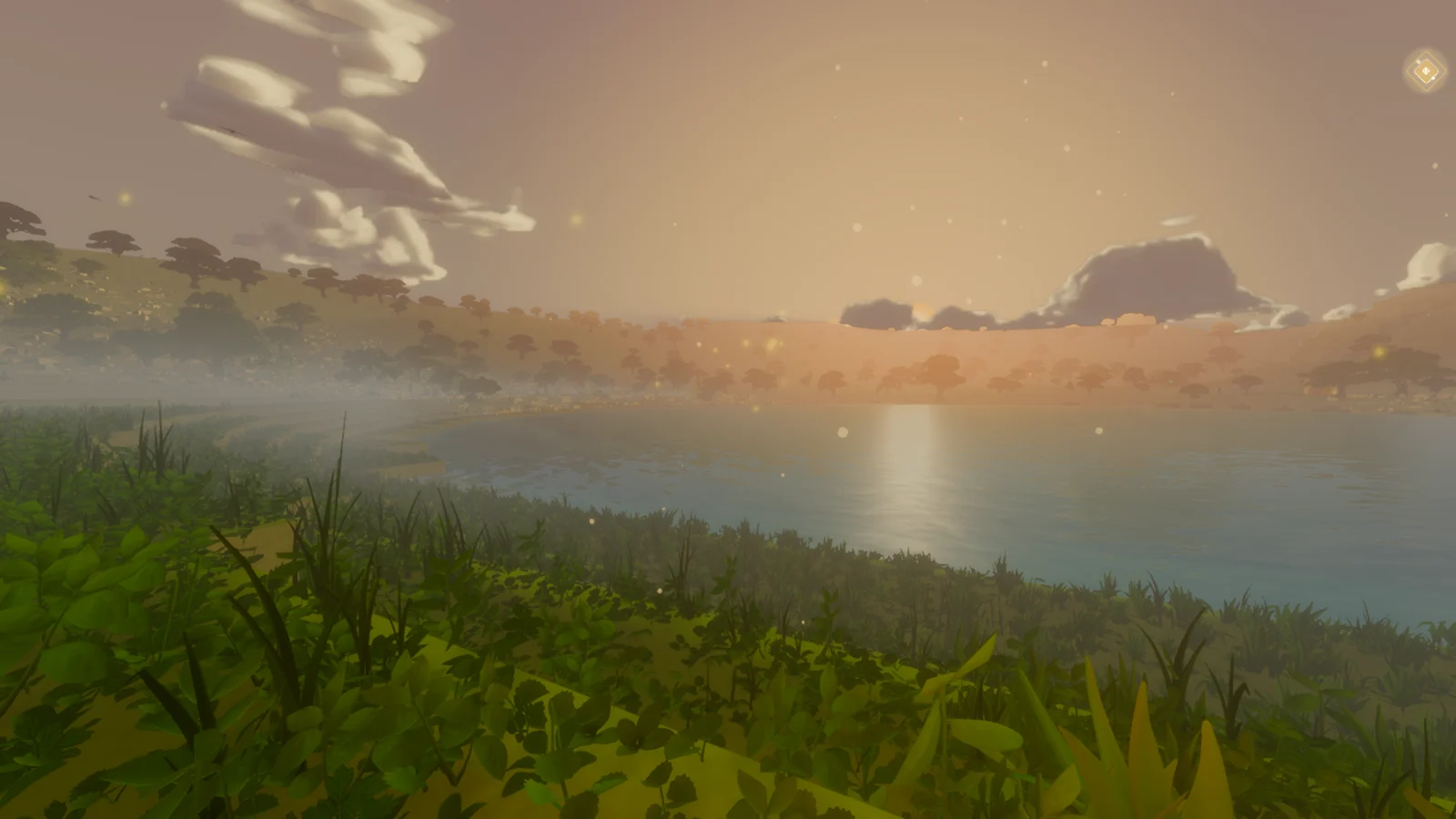
For that to have any weight, the larder had to actually drain, so now it does. Farming is your steady base, fishing is the flexible top-up while the crops are still coming, cooked meals beat raw ones and leave a brief warm mood glow, and the fields on the homestead panel tell you how many days of food you have left in plain language.
And then the part I’m most pleased with. There’s now a ladder by which farming graduates to the colony, one verb at a time, in the order you taught them:
The moment the story witnesses your first planted field, the luminids start watering it for you. One story beat later, they will replant what you already chose to grow there, same crop, seeds from the shared larder. And much later, at a moment I want to land as a story beat rather than a settings toggle, they take over the harvest entirely. That last rung is the colony saying rest, Keeper.
You never lose a verb or a choice. They just start carrying the buckets.
Where that leaves us
I set out this month to make the luminids’ insides better and mostly ended up making their outsides honest: the traits are real, the arc is real, the hunger is real, and the ceremony notices you. Next month the world they live in gets the same treatment, and it’s a big one.
See you in the grove.
Nick