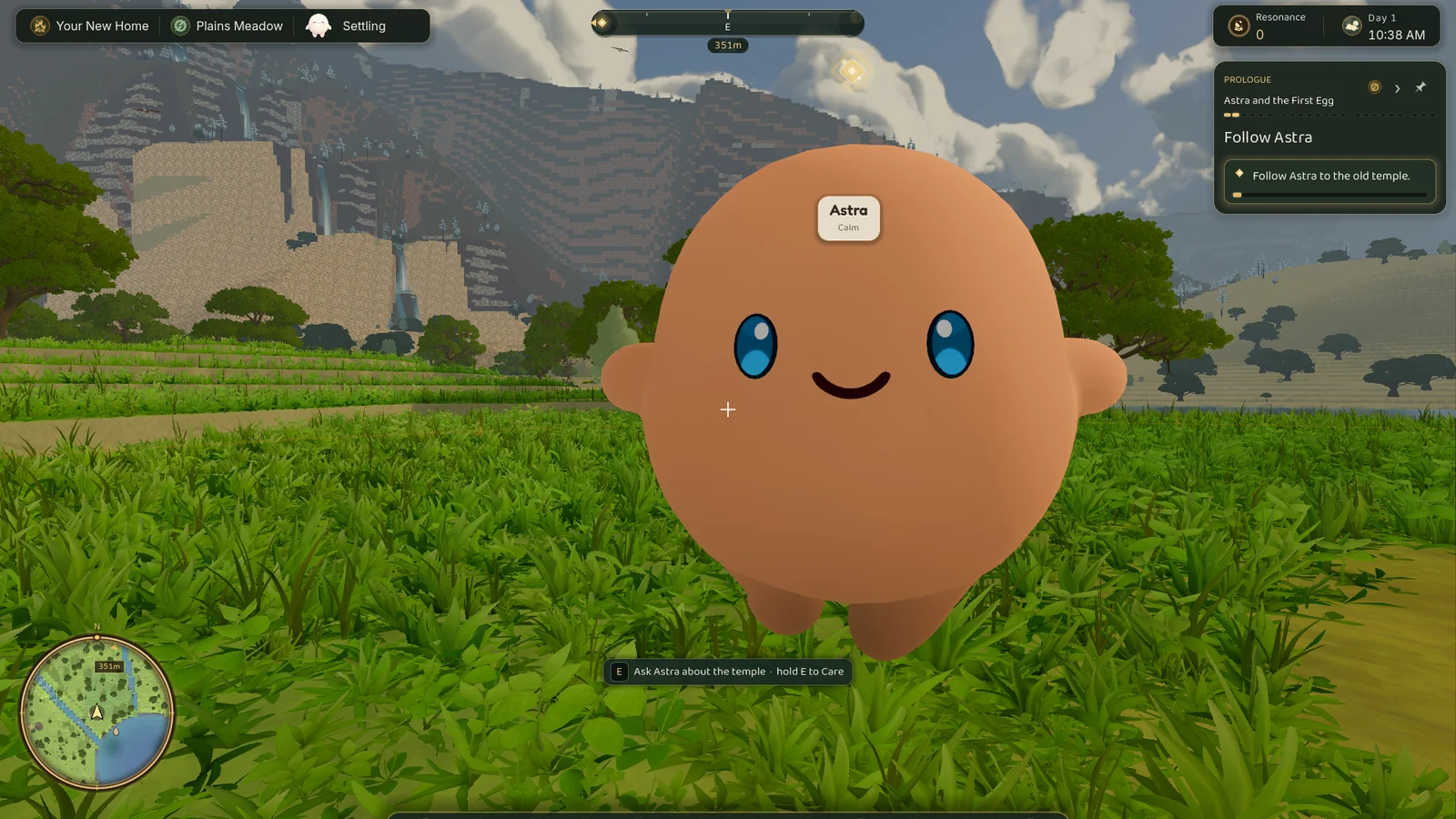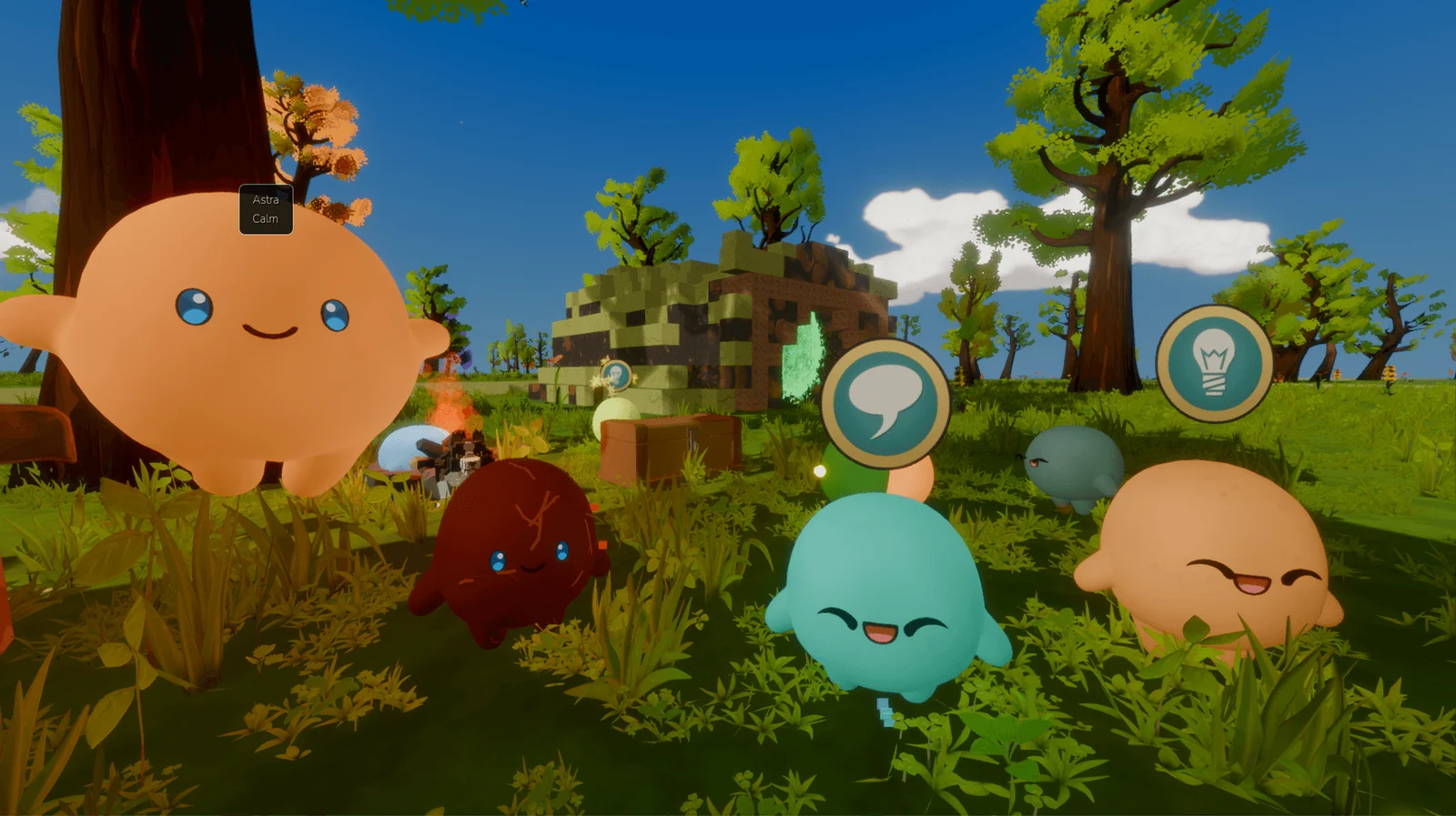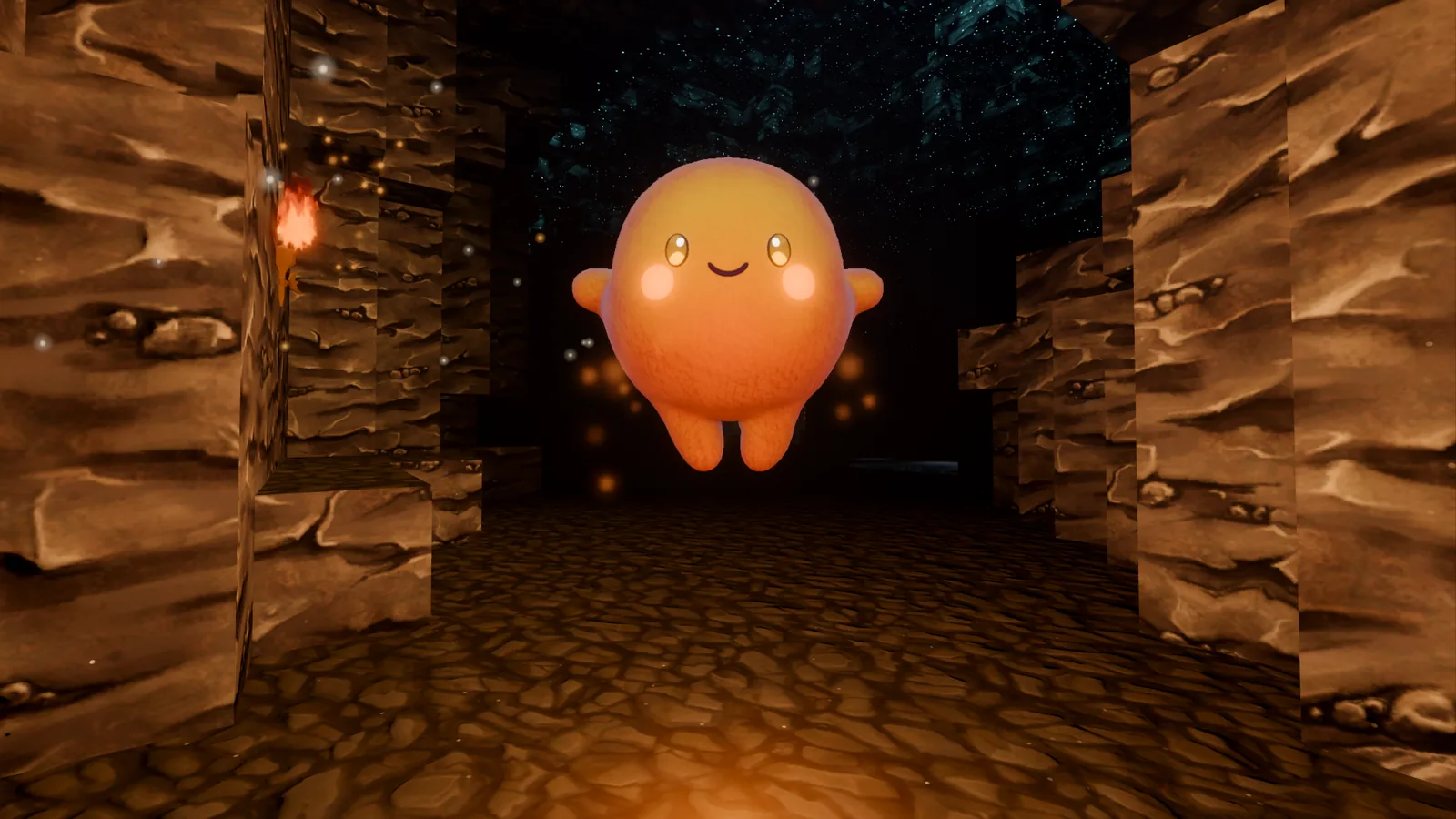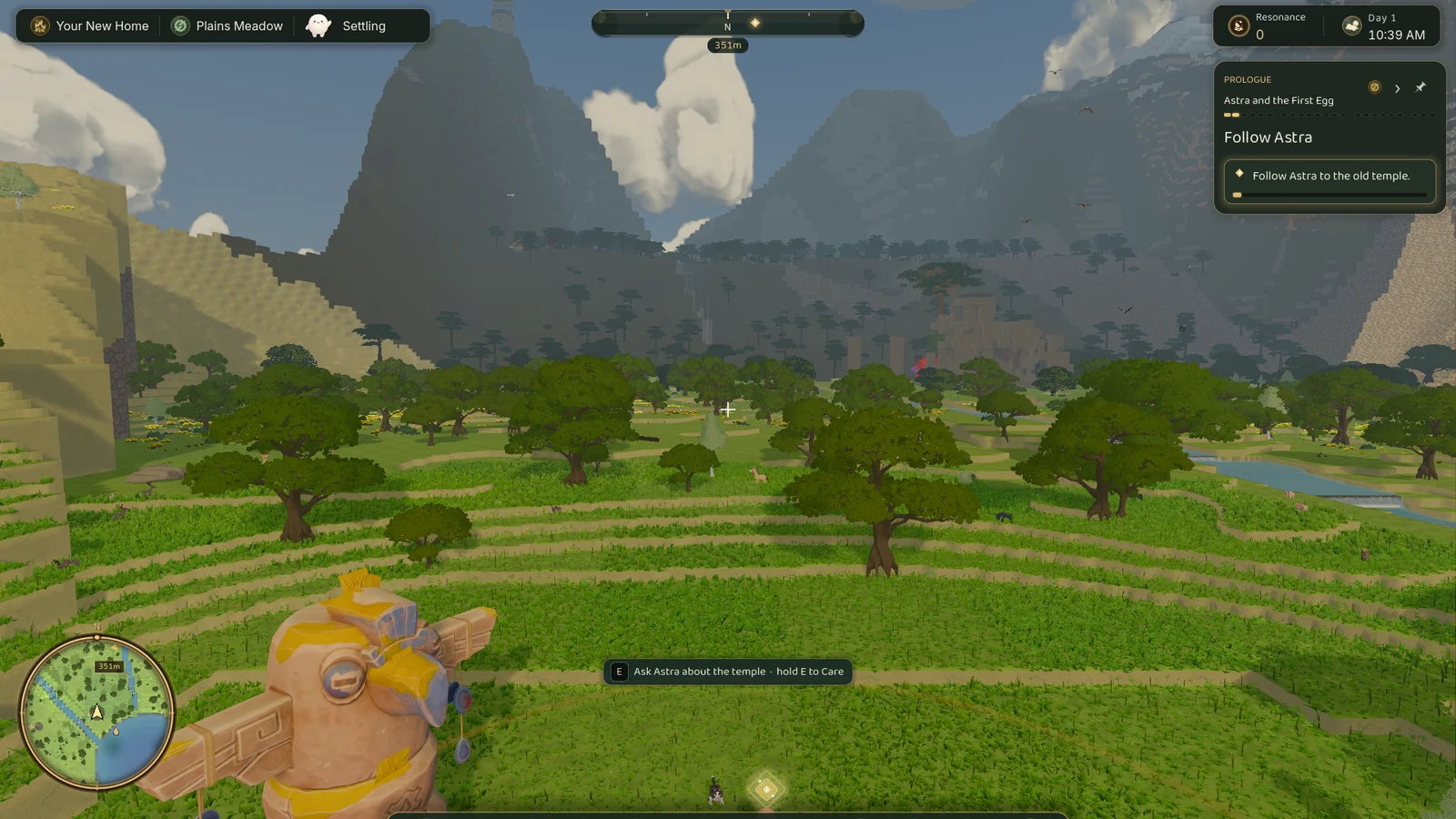


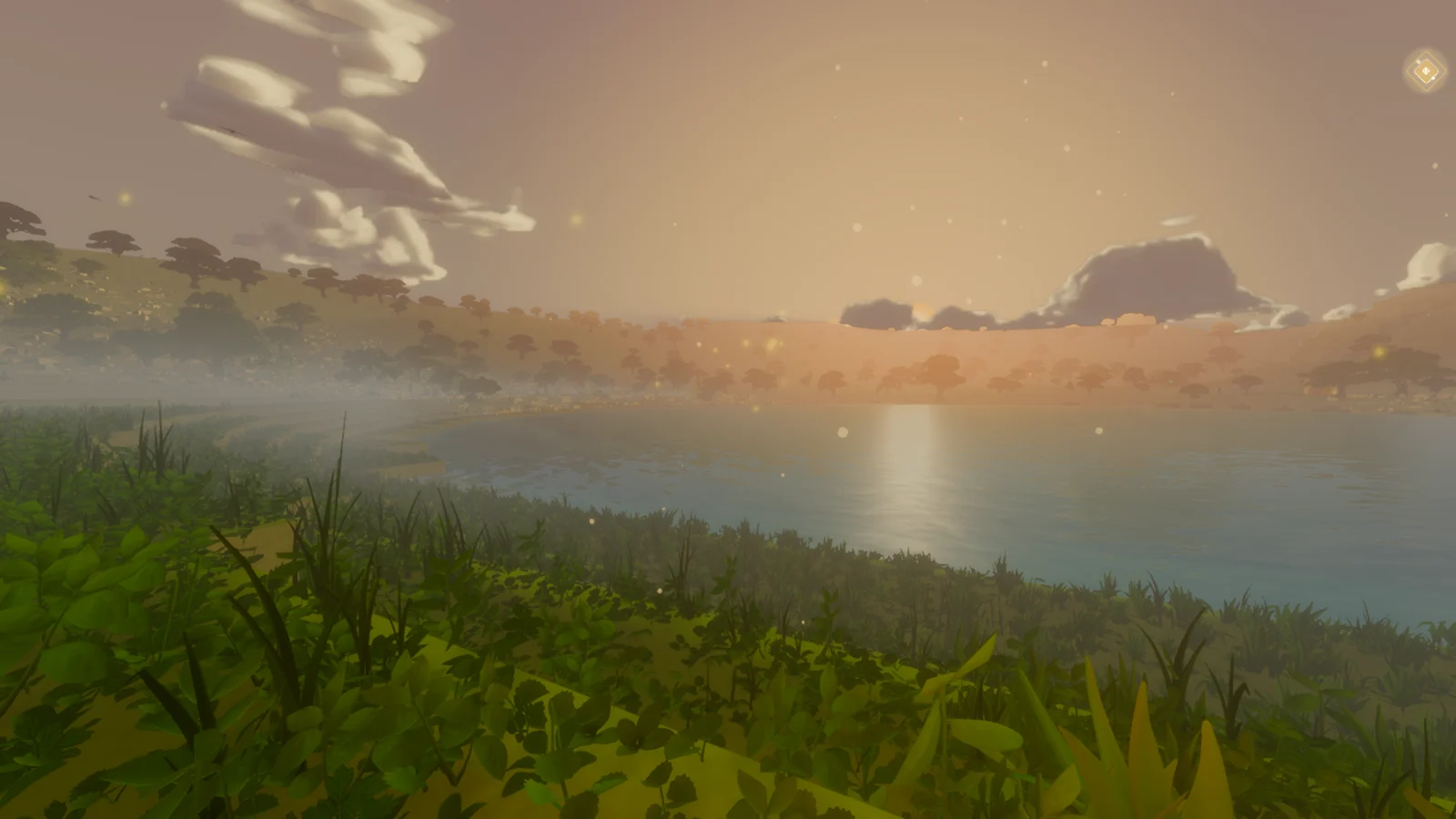
There’s been a hole in this game’s fiction since the day I started it, and I didn’t spot it until August was nearly over.
The story says the luminids are a people, with a history and a home they’re trying to get back to. But the only luminids anywhere in the world are the ones you hatch yourself. So whatever the script says, the world says: you are keeping the last embers, and when they are gone, that is it.
That’s a beautiful sentence, and it’s the wrong game. So September is about fixing it.
Wild bands
There are luminids out there already, living in bands.
Nine bands, one for each of the island’s realms, with six to ten lights in each, plus two or three secret bands for people who go looking properly. A cave band. A band on a sea stack. They never spawn alone, because a single wild creature standing in a field is a resource node, and a group of them around a home is a culture.
Each band has a home site, but nothing is built there. No wild villages, no huts, no little campfires. Your village stays the only built thing on the island, which matters to me. Instead, the place changes over real time just because they live there: faint moss glow creeping across the ground, flecks of light caught in the grass, worn patches where they gather.
They have a proper day: a wake-ripple at dawn, foraging in a loose, drifting cloud across their territory, play-knots at midday where two or three lights orbit each other for no reason at all, a regather at dusk, and then the sleep-cluster.
The sleep-cluster is the one I can’t stop thinking about. At night a band huddles together, pulsing dimly, and you can see it from a hundred and fifty to three hundred metres away. So you can be standing on a ridge in the dark, spot a small constellation on the ground in the next valley, and decide whether to walk down.
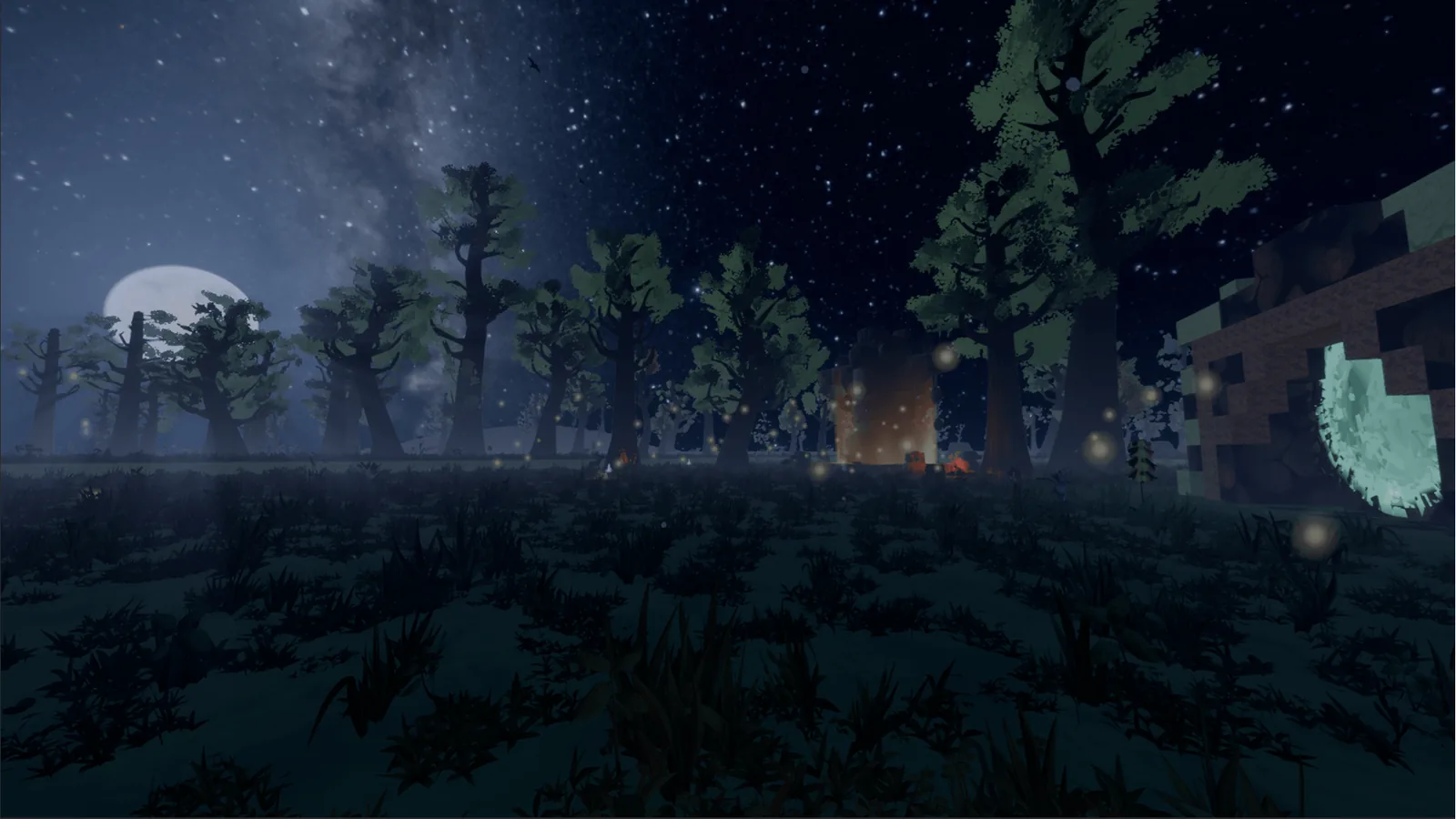
Each band also takes on the look of its realm. The tundra band drifts slow and dim under an aurora shimmer. The desert band flares at dusk. The grove band weaves through the canopy shade. The coast band plays chase with the wave line. The volcanic band stays in the ember glow all night.
First contact is shyness
Walk toward a band and the whole group dims and drifts back at once.
Then one comes closer. Every band has a scout, the brave one that edges forward while the others watch from behind. That’s your first contact, and it’s nervous.
There’s no taming. No trust bar, no meter, no percentage. Wariness is a real number in the simulation, and it drops a little every time you visit and nothing bad happens, but you’ll never see it. What you’ll see is that the distance they keep gets shorter. They stop dimming. The scout starts arriving before you’ve finished walking in.
The behaviour is the meter. If I ever need a bar to tell you a creature trusts you, I’ve got it wrong.
Further along, a band will teach you something: a song, a dance, a light pattern or a lantern colour. If one of your own luminids comes visiting with you, it can learn it, take it home and perform it in your village.
These gifts do nothing: no stats, no speed, no unlocks. The moment a cultural gift makes your colony 4% faster, it stops being a gift and becomes a checklist, and you will absolutely go and farm the other eight bands to complete the set. So all they change is how your village looks and sounds. Over a long enough game it fills up with songs, dances and colours from every band on the island, just because you were kind to people.
And one morning, one of them chooses you
There’s no cutscene and no prompt. No “a wild luminid wishes to join your colony, accept / decline”.
One morning you wake up and the scout is simply there. Standing shyly near your door, in your village, waiting. It walked through the night to get to you, and it arrived while you were asleep. The only record that it happened is a dated line in its own ledger about the night it walked.
Out in the wild, a luminid has no name, no ledger and no personality. When one chooses you, that’s its beginning, and everything I built in July about naming, earning quirks, forming a bond and eventually stepping into its own light applies to it exactly as it does to the ones you raised.
Meanwhile, the unglamorous half
Wild bands are the headline, but September also has a lot of hands-and-knees work, and some of it is overdue.
Farming gets actual hands. Right now you make a plot by swinging a terrain tool until the ground turns to dirt, and it looks exactly as bad as that sounds. That’s being replaced with a proper hoe and properly tilled soil: real furrows in the block, visibly dry or watered, with dirt crumbs kicking up as you work. The well is being fixed so it actually shows up and you can use it, watering and harvesting get a pass, and the farming interface is being rebuilt from scratch because the current one is, in my own words, not good.
Glimmer gets cards, and you find them out in the world. Glimmer is the little board game luminids play. You’ll start with a simple core set, and every card you find permanently adds a piece, a move or a pattern to what you’re allowed to do. So Glimmer gets deeper because you explored, not because you ground it.
Better still, this fixes a problem I already had. There are named places on the island that are fully wired up to be discovered and have absolutely nothing in them when you get there. So the Ember Verse card goes at the forge, the Tide Verse at the tidal ruin, and Season’s Turn at the frozen temple. The empty places get something worth finding, and the cards get homes.
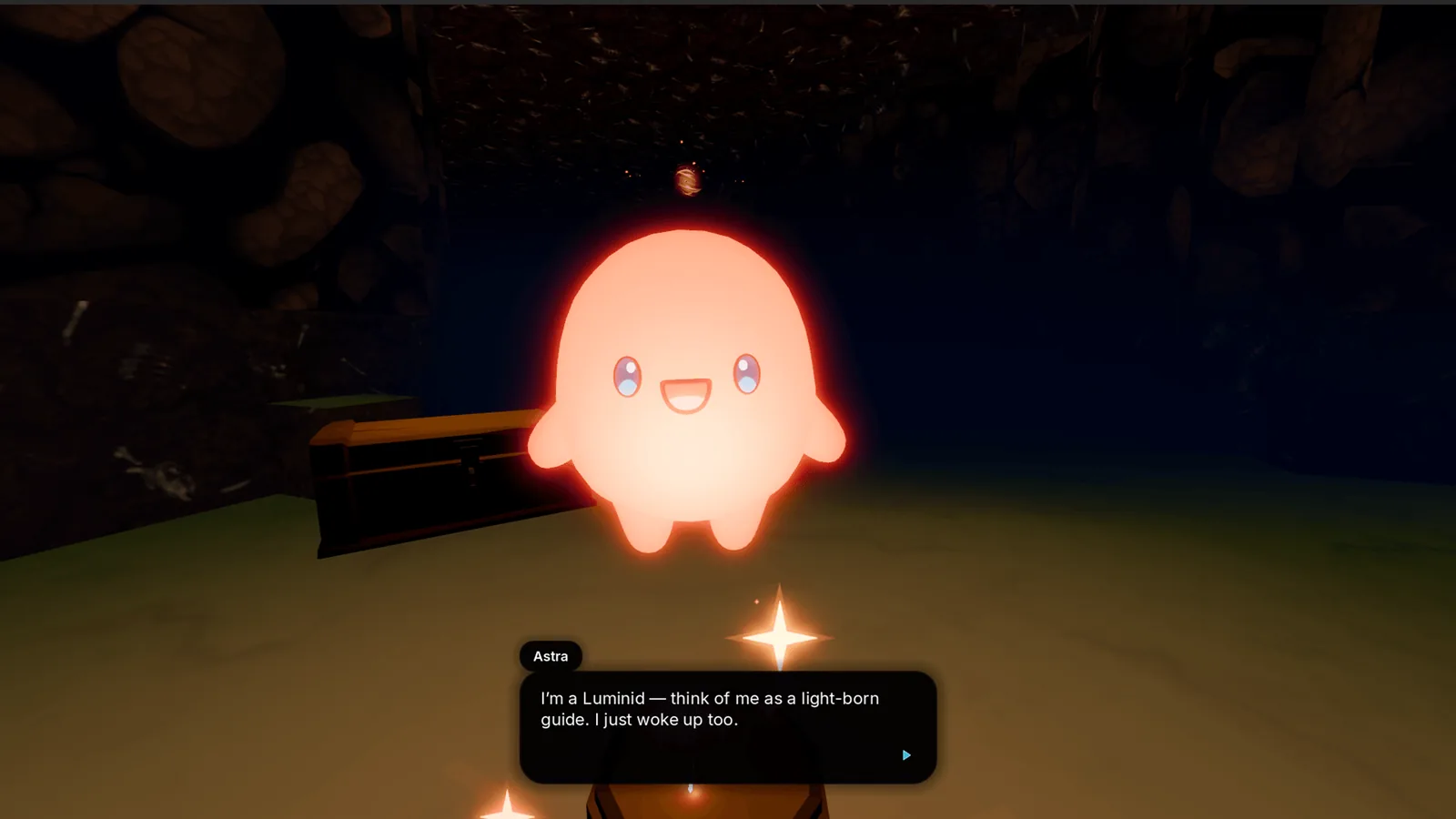
Deep ore gets a use. Ore mining works and always has, but the deep tiers have had nothing to be spent on. They’ll feed three families: warm light you can build with, like lanterns and beacons; keepsakes you can give, like a tiny gold bell or ring that a luminid will remember and treasure, and a lightstone charm one will carry at night; and tool mastery, including a pickaxe that lights up the cave as you mine.
And the gate on better crafting moves from population to discovery. You don’t earn a better pickaxe by having enough colonists. You earn it by walking into your first cave.
Three long jobs
I want to end with three things that won’t be finished this month, or possibly this year, because pretending otherwise would make these dev logs worthless.
Performance. My own runs sit around fifty frames a second, and the target is far above that, with zero stalls, on a Steam Deck. The playtest was unambiguous: a third of players are on old hardware, nobody had a clean session, and in a game this calm a hitch stands out a mile. What I won’t do is buy frames by switching the look off. We measured every graphics setting, and all of them together are worth well under a millisecond, so turning everything off would cost a weak machine the whole look and buy it almost nothing. What a weak machine actually needs is what my machine needs: less held in memory, and no single frame doing a second’s work. That’s harder, and it’s the real job.
The colony ladder. A hundred to two hundred and fifty luminids is signed off and working. Five hundred is next. Ten thousand at once is the number I actually want, and I’ve ruled out the easy way of getting there, which is thinning them down to cardboard at a distance. If there are ten thousand lights on this island, they’re all going to be someone. That’s a problem deep in the foundations, and it’ll take as long as it takes.
The Ark. Seven rungs, built piece by piece by your colony, lighting up as it grows, until it flies. And then, because of a promise I made a long time ago, it comes back.
Where that leaves us
Once the wild bands are in, this stops being a game about keeping the last embers alive. Your colony becomes one branch of a people who live all over the island, and you’re helping some of them find their way home.
See you on the ridge.
Nick