


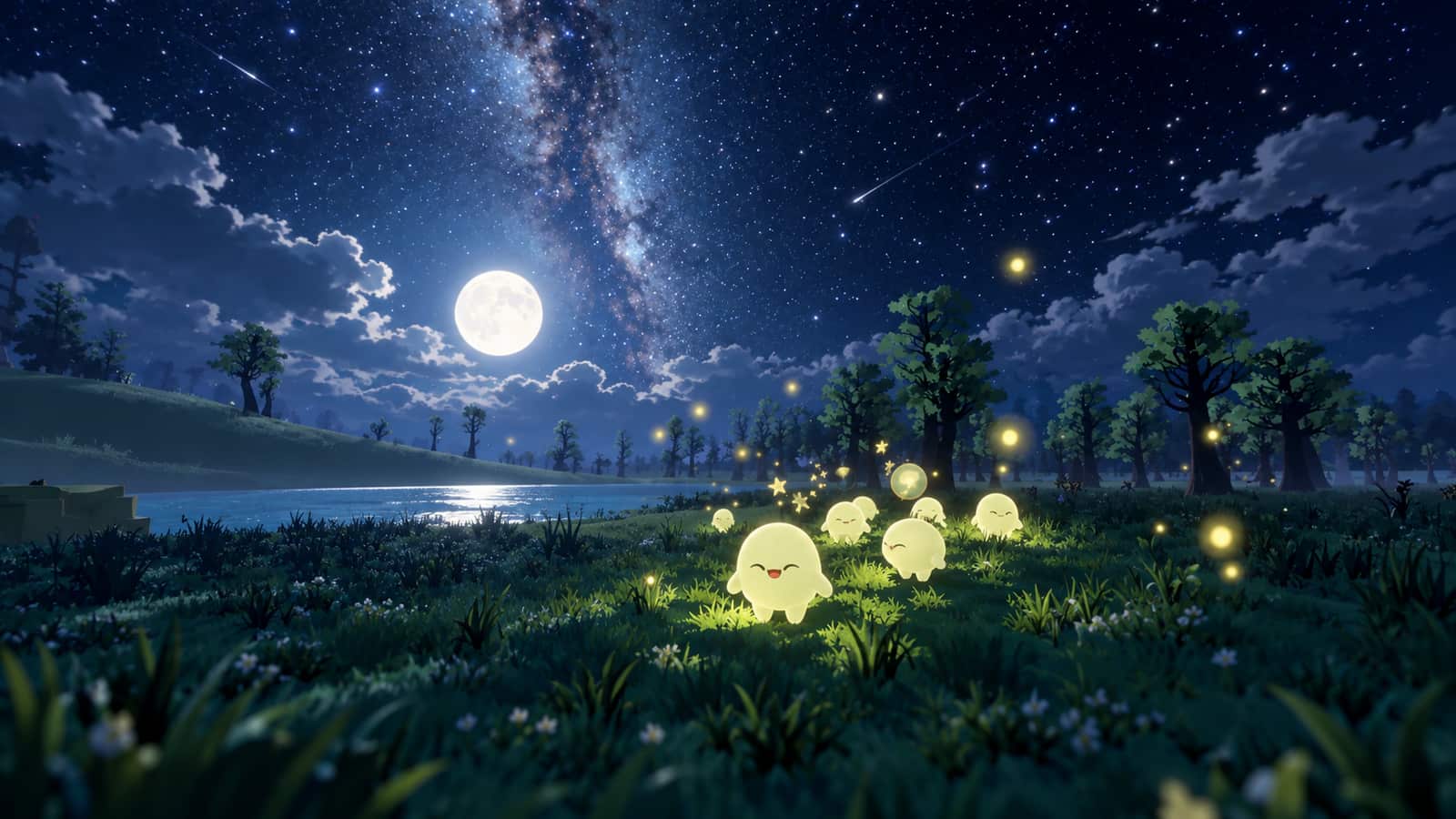
No combat. No fail states.
Luminids has no enemies, no health bars, no failure screens, and no creature in it can die. Here is what that actually means, and what a game does for tension once you have given all of that up.
"No combat" is easy to put on a store page. It is much harder to build a game that still has a reason to keep playing once you have removed the thing most games use to create one.
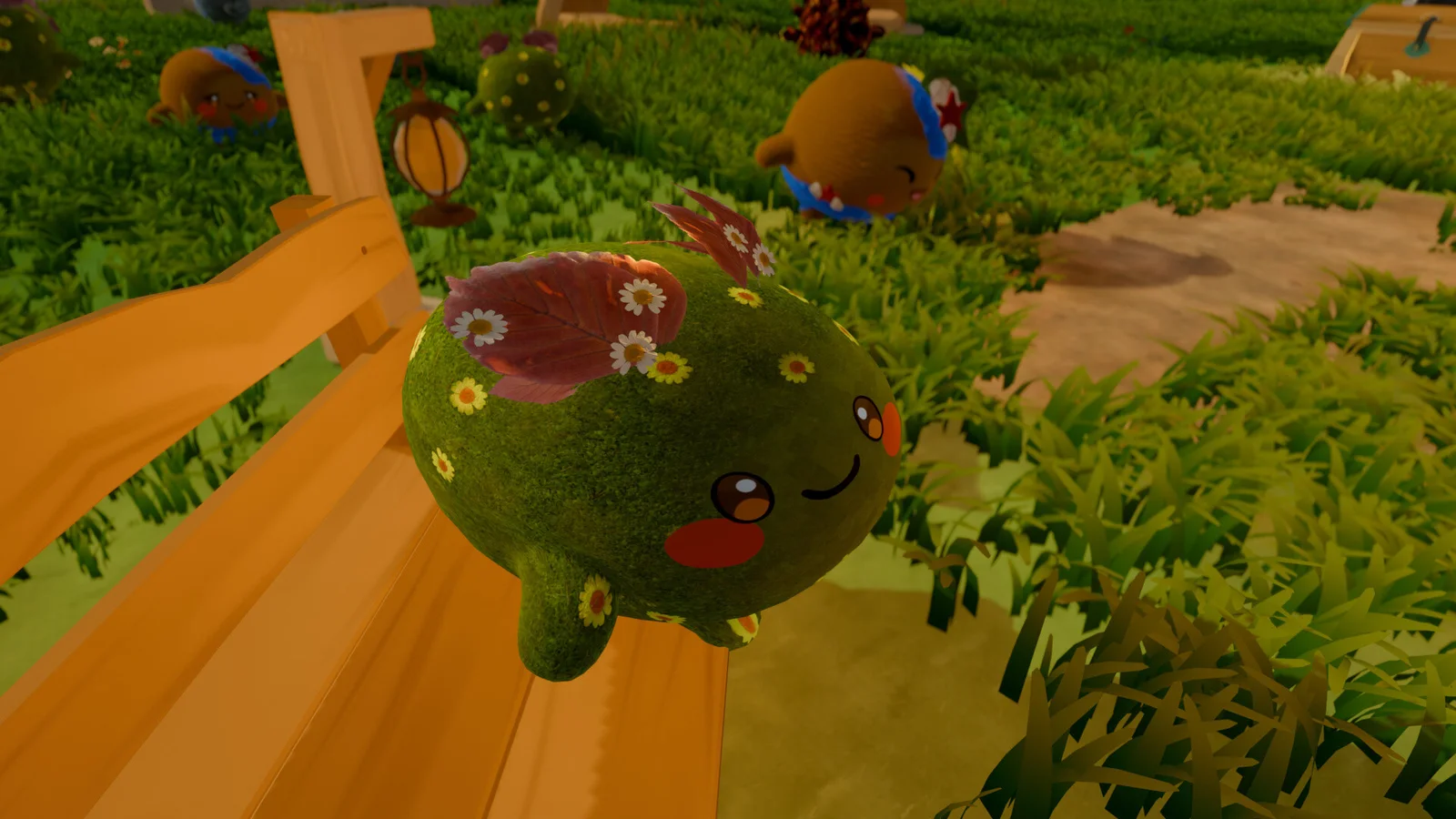
What we actually removed
To be specific, because "cozy" gets used very loosely:
- There are no enemies and no hostile creatures.
- There is no player health, no combat system, and no weapons used as weapons.
- No Luminid can die, leave, or be permanently lost. Not from hunger, not from cold, not from neglect.
- There is no game over screen, no failure state, and no run you can lose.
- There is no XP and there are no levels.
You cannot lose Luminids. If you put the controller down for twenty minutes, you will come back to a colony that is fine.
The problem this creates
Take away threat and you take away the engine most games run on. Threat is what makes a resource matter, what makes a decision cost something, and what makes a player lean forward. Remove it carelessly and you do not get a calm game. You get a diorama: pretty, inert, and finished in forty minutes.
Plenty of games marketed as relaxing solve this by quietly putting the pressure back in through a side door. A timer. A season that ends. A villager who leaves if you ignore them. A daily chore list that punishes you for not logging in. These work, but they are the old engine wearing a soft coat, and players can feel it.
What we use instead: visible want
The rule we arrived at is tension through visible want, never through death.
A hungry Luminid does not starve. It comes and finds you. It chirps, pats its tummy, and floats a small bread icon above its head. If you keep ignoring it, its glow dims, it slows down, it stops working, and it sits.
That is the entire consequence. Nothing worse happens, ever. And it turns out that is enough, because the pull is not fear of loss, it is a small creature you have named looking at you and wanting something you can give it. It is a twenty second heartbreak you can personally fix, and afterwards it remembers that you did.
Threat makes you act to avoid a cost. Want makes you act because someone needed you. The second one is slower and it is much harder to build, but it does not leave you tired.
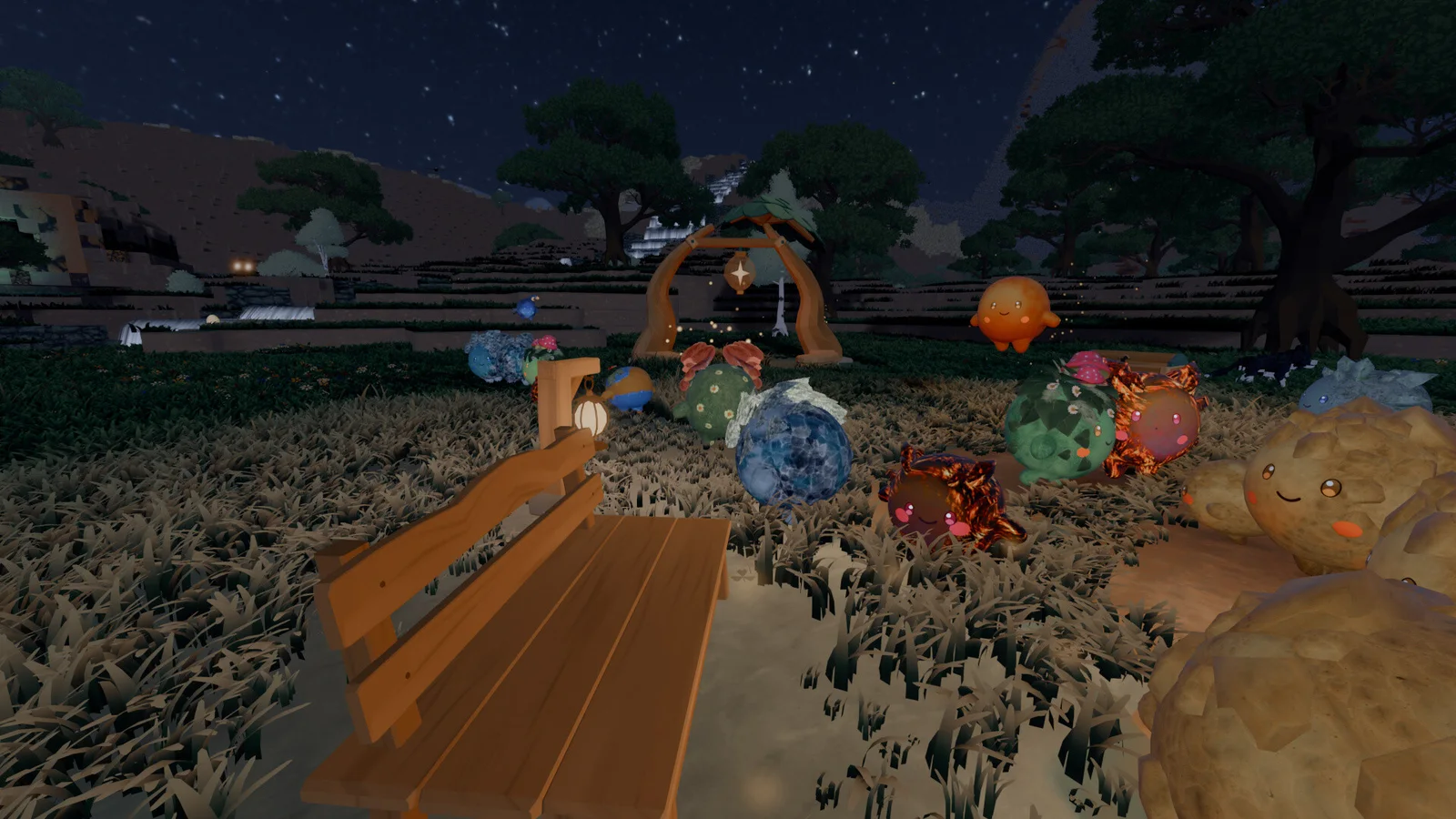
No XP, ever
There is no experience system in Luminids and there never will be. No levels, no bars, no "Luminid reached level 4".
A number going up is a promise that the creature is becoming more valuable to you. We want the opposite: a creature that becomes more specific. So growth is earned quirks, real relationships, and what a Luminid has personally made sense of.
Quirks are earned by doing the thing, not assigned at birth. A Luminid that keeps investigating becomes a Curious Explorer. One that works near water becomes an Aquaphile and is genuinely contented by being near it. One that dances at gatherings becomes a Dancing Spirit. Your colony's personalities differ from someone else's because your two colonies lived different lives.
The arc that replaces a level cap is called Becoming. A Luminid reaches it when it has earned three quirks, formed one deep bond, and contributed to one real build for the colony. The colony recognises it and its ledger gets one line: "Stepped into their own light."
Then nothing switches off. It keeps discovering quirks, keeps making friends, keeps living. The arc ends; the creature does not. Dev Log 17 goes through how that was built.
The meter is the behaviour
A related rule, and the one we break most often by accident: if a creature trusts you, you should be able to see that in what it does, not in a bar.
Wariness is a real number in the simulation. You will never be shown it. What you will see is that the distance a creature keeps gets shorter, that it stops backing away when you approach, and that eventually it starts coming to meet you before you have finished walking over. If we have to draw a bar to tell you a creature trusts you, we have failed at the only thing the game is for.
Why performance is part of this promise
Here is the part that surprised us. Once you have promised calm, your frame rate is a design feature.
A game about tension can survive a stutter. A game whose entire proposition is that it will not stress you cannot, because a hitch is a small shock, and enough small shocks make a calm game quietly unpleasant without the player ever being able to say why.
Our last playtest was blunt about it: a large share of testers were on graphics cards several generations older than the machine the game was being built on, and nobody had a session free of stalls. That reframed the whole year. Performance stopped being a technical chore and became the product. We are also refusing the easy fix of buying frames by turning the look off, because a weak machine that loses the whole art direction has not been helped.
What this is not
It is not a game without stakes. Things you build persist, creatures form attachments that took real time to earn, and a colony you have run for thirty hours is not replaceable.
It is not idle or afk. You are doing continuous work: shaping land, planning, building, exploring an island of nine realms, and finding things that are genuinely hidden.
And it is not short. Removing failure removes the artificial length that comes from losing progress and redoing it, which means the length that is left has to be real.
Keep reading
- What is Luminids? — the plain explanation
- How it compares to other cozy colony sims
- Dev Log 17 — quirks, hunger, and the Becoming arc
- Dev Log 16 — readable moods
- FAQ