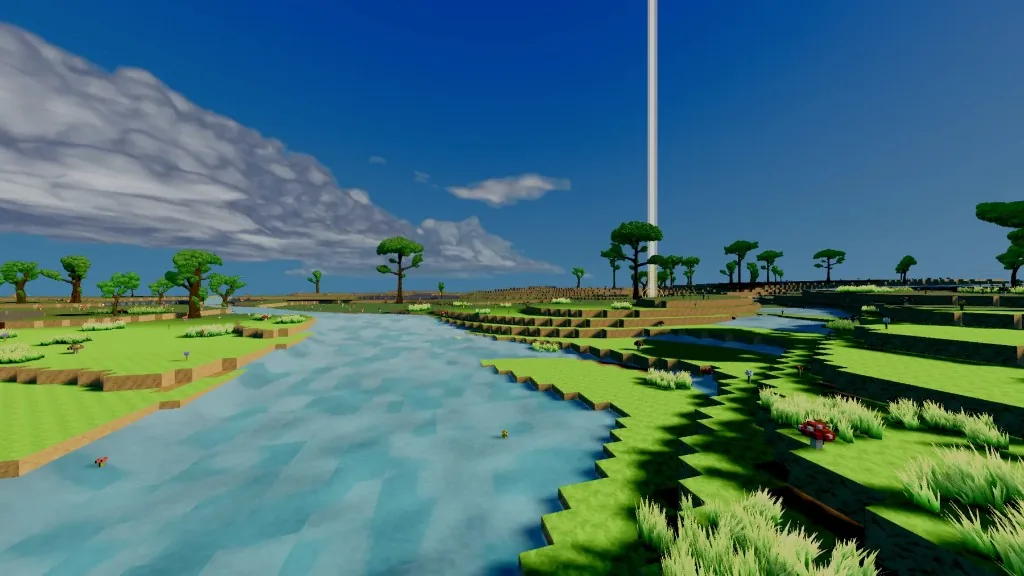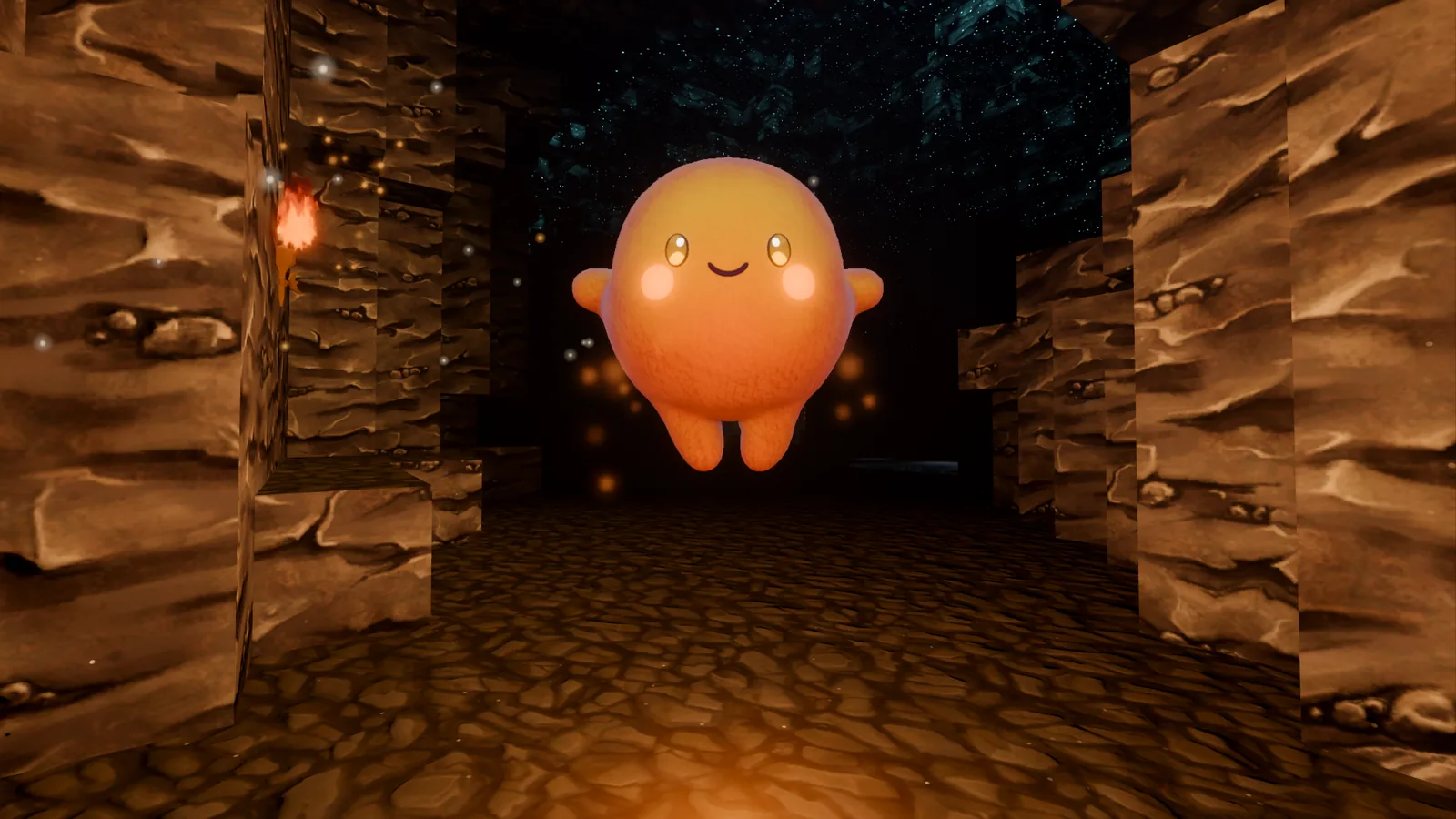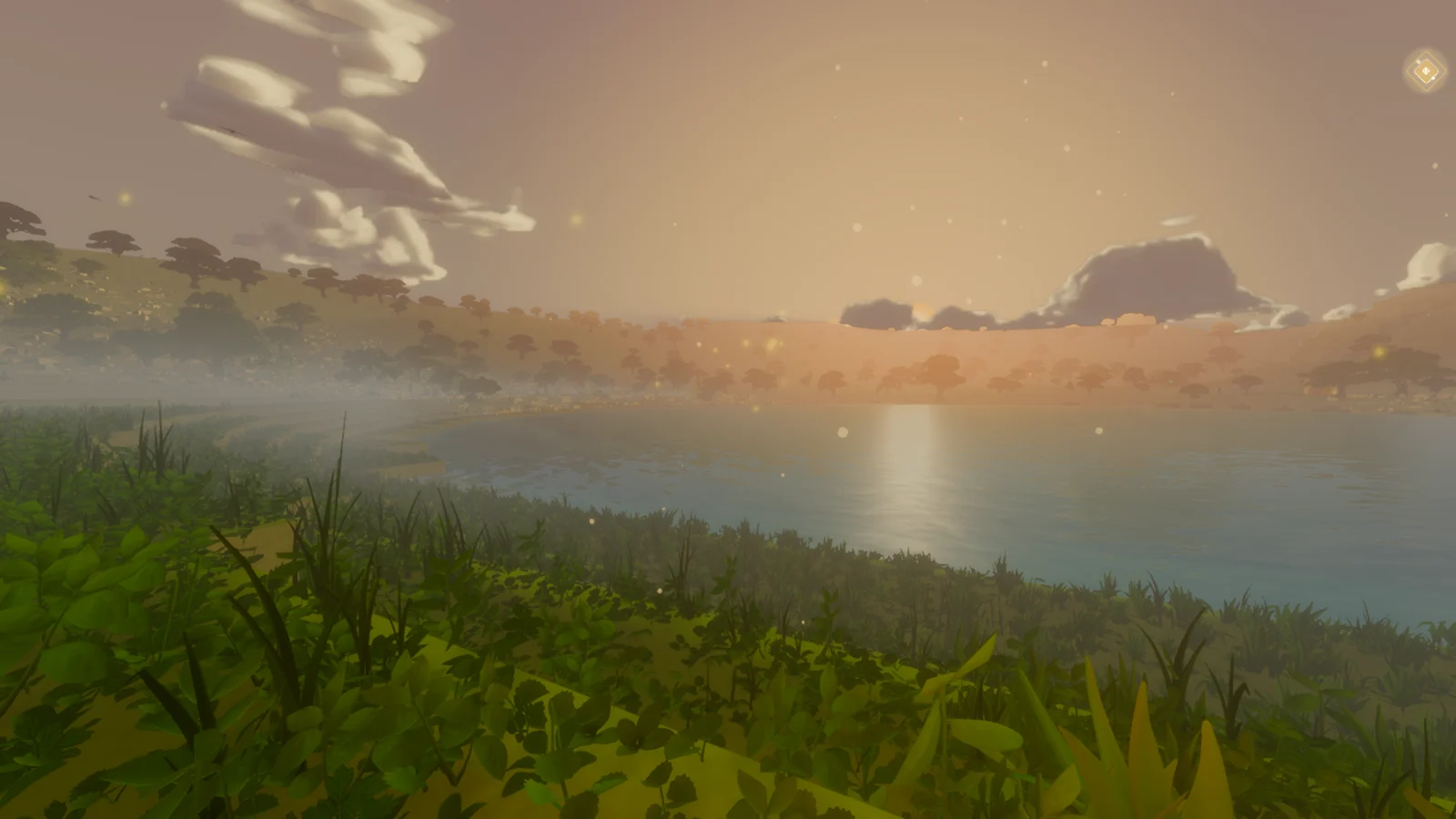


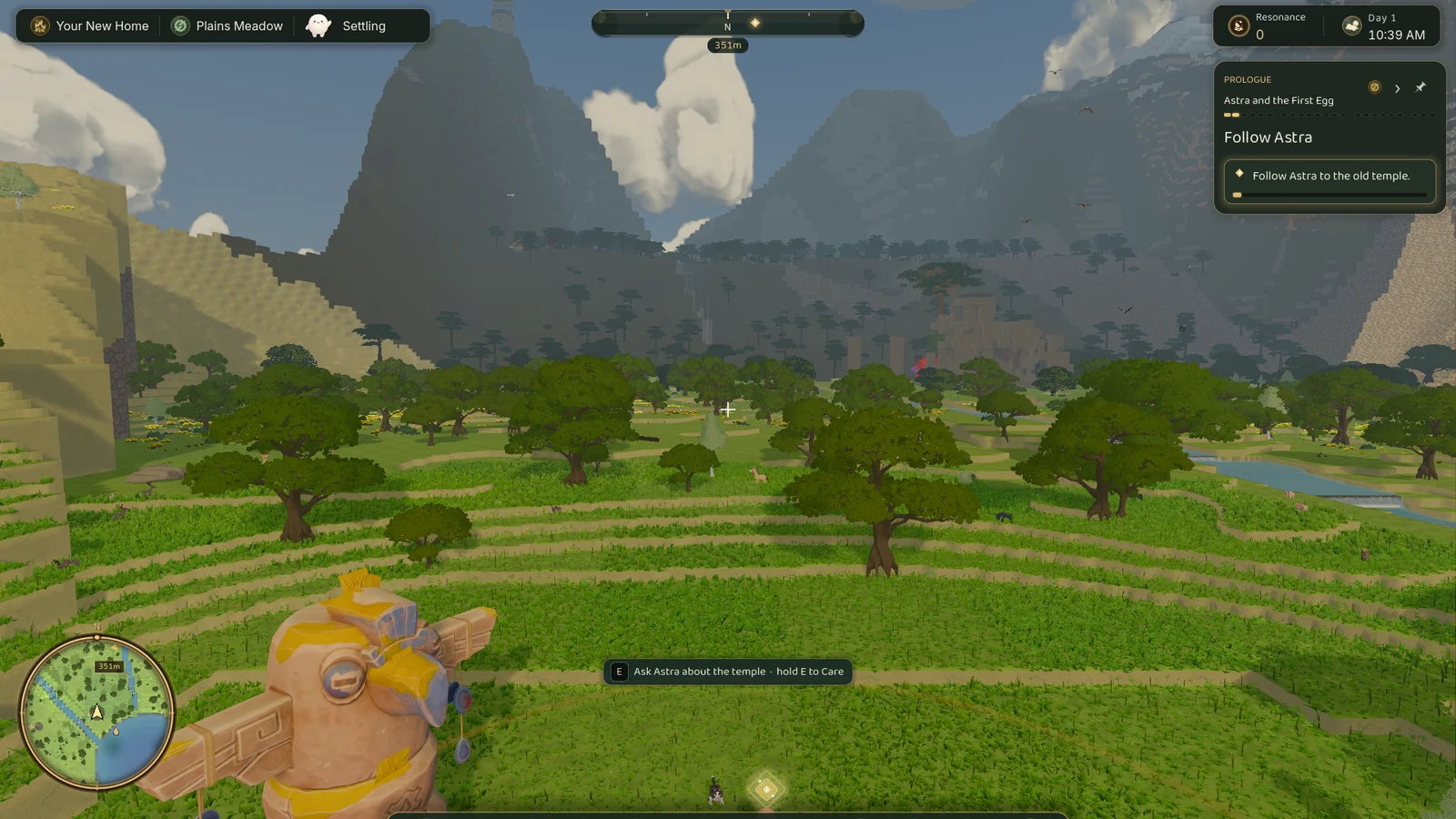
For most of this project Luminids had an infinite procedurally generated world. It went on forever in every direction and it generated cleanly, which is a genuine engineering achievement.
We deleted it and replaced it with a single island, about four kilometres by five.
This post is about why, because “infinite world” sounds strictly better than “small world” right up until you try to set a story in one.
Infinite means never anywhere in particular
The problem wasn’t technical. An infinite world simply can’t contain a place.
If the terrain continues forever, then every valley is one of infinitely many valleys, and the game cannot ever say this mountain. Nothing can be rare, because you can always walk further and find another one. Nothing can be a landmark, because a landmark is defined by being the only one. And no spot can mean anything to you unless you can find it again and it’s still the same spot.
Luminids is a game about a small people arriving somewhere and making it home. An endless procedural field is the exact opposite of somewhere.
Authored where it matters, generated where it doesn't
The replacement is not hand-built. Hand-building four by five kilometres of walkable terrain is not a thing one person does, and it would be a waste of a machine that is very good at the middle scale.
So the island is both. The mountains are where I decided the mountains should be. The ground between them is still built by the generator, because at that scale the machine does better work than I would.
Underneath, the whole island is a single compiled generator: a graph of 376 nodes that compiles in about a sixth of a second, sitting on a compiled field carrying height, region, land and ocean, coast distance, water surface and slope across the entire island.
On top of that, five hand-authored kernels get composited in a fixed order, each blending into its neighbours over a 64-metre band. That blend width is the trick. It’s wide enough that on the ground you genuinely can’t find the seam between a pass I sculpted by hand and a meadow the noise produced.
Nine realms, and a test for whether they are real
The island has nine realms:
- Plains Meadow: home, deliberately the least opinionated place on the island
- Temperate Grove: the world’s warm interior
- Highlands Mountains: thin air, everything ten percent sharper
- Tundra Alpine: held breath, blue silence that is somehow kind
- Desert Rim: heat you can see
- Desert Badlands: the anvil, carved red stone that keeps its edges
- Volcanic Highlands: ash holding its breath so the embers can speak
- Coast Beach: postcard air, everything rinsed clean by the sea
- Ocean Shallows: in it rather than beside it, a sea-glass world
Those are not marketing lines. They are the acceptance criteria, and we made them testable:
That last clause is the hard half. Anyone can tint a biome orange. A tint looks like a preset laid over a generic world, and the moment a player notices that, the place stops being a place and becomes a shader.
Three layers, doing different jobs
So the identity of a realm is delivered in three layers, and getting the proportions right took most of the month.
The body (its rocks, plants, water and weather) is the foundation. No colour grade has ever rescued a bare floor. If a realm is not identifiable with the grading switched off entirely, it is not finished.
The light axis (how the ambient and the sun are actually tinted) is the strong layer. This is what makes somewhere feel hot or cold, and it does far more work than people expect.
The colour grade on top is barely there: a hundredth of a step, just enough to finish the look.
The results I am most pleased with are the ones that go against the obvious choice.
Tundra refuses golden hour. Every other realm turns honey at dusk. The tundra crown pulls to a cold rose-violet instead, so sunset there reads as the temperature dropping rather than the day softening. And tundra night is brighter than any other night in the game, because snow reflects the sky and the ground goes blue-silver under stars. If you build a tundra that is simply “the normal world plus white”, you get a realm nobody remembers.
Desert flips completely between noon and midnight. Noon is heat as light rather than heat as saturation: colours slightly eaten by glare, shadows open and dusty rather than deep. Night goes cold, blue and star-clear, and a campfire pops harder in the desert than anywhere else in the game.
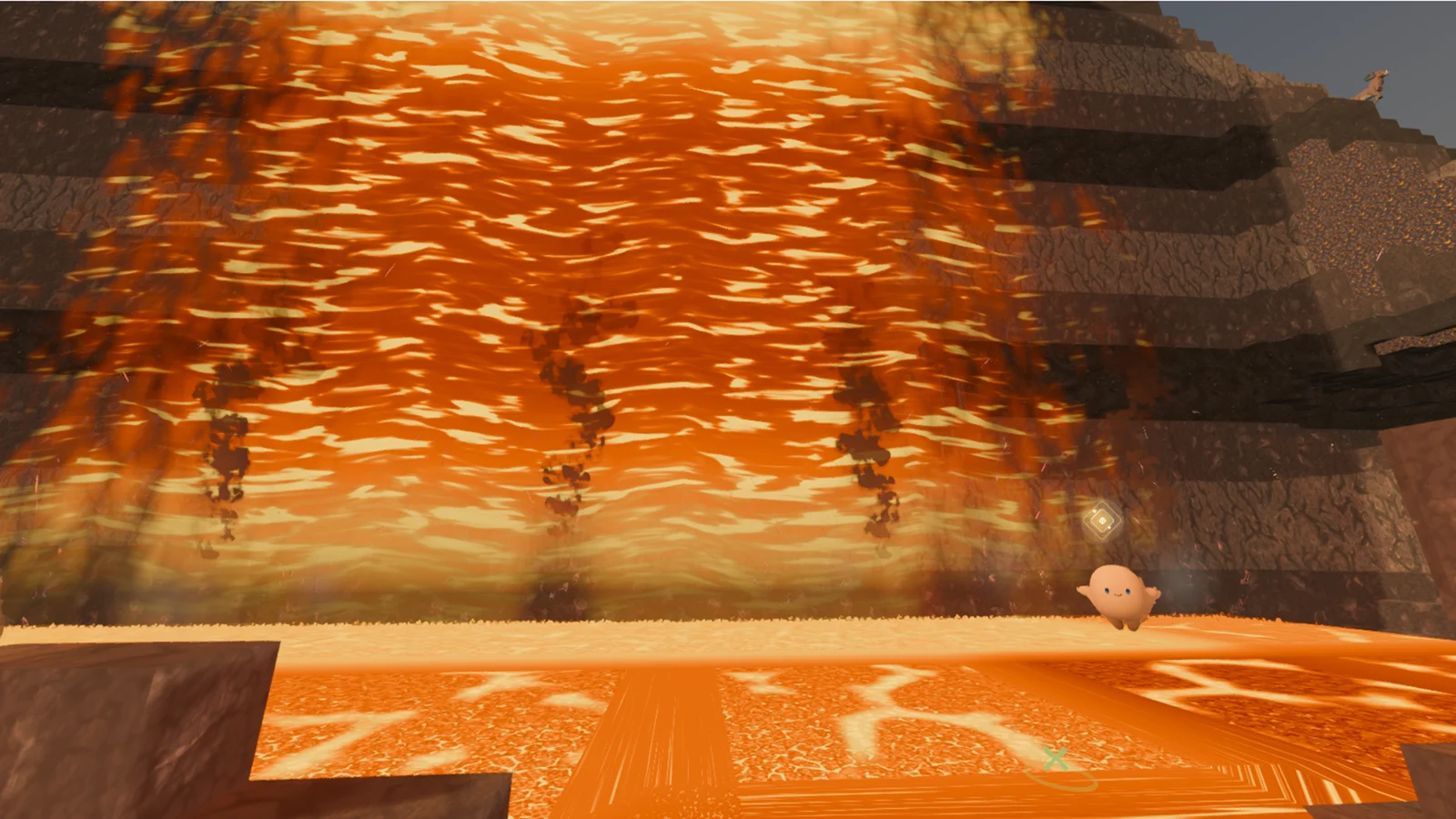
In the volcanic highlands the land is told to shut up. Muted warm grey, sooty shade, no clean whites under an ash sky. Any frame where the terrain competes with the lava has failed, because in that realm the lava is the protagonist.
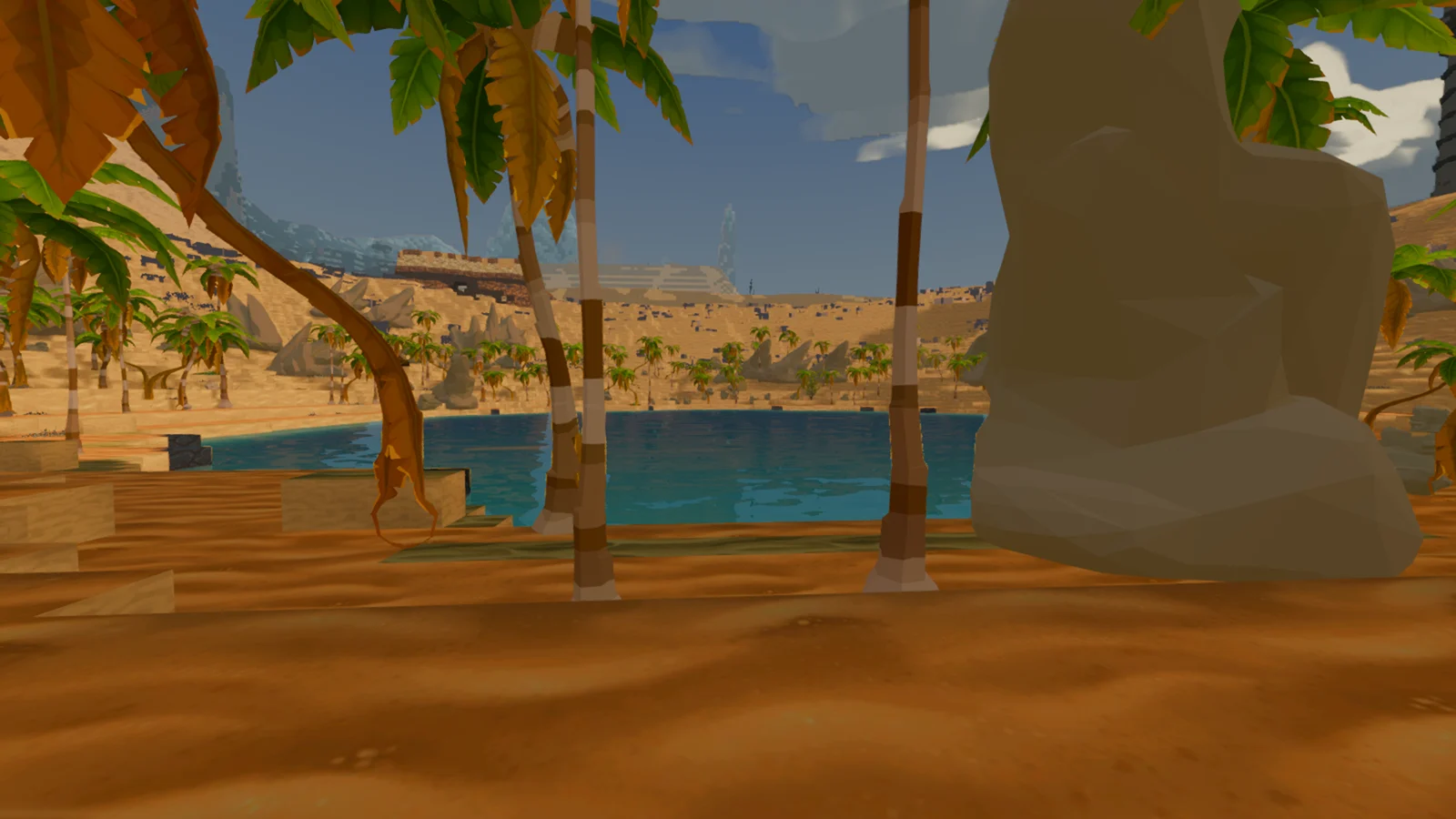
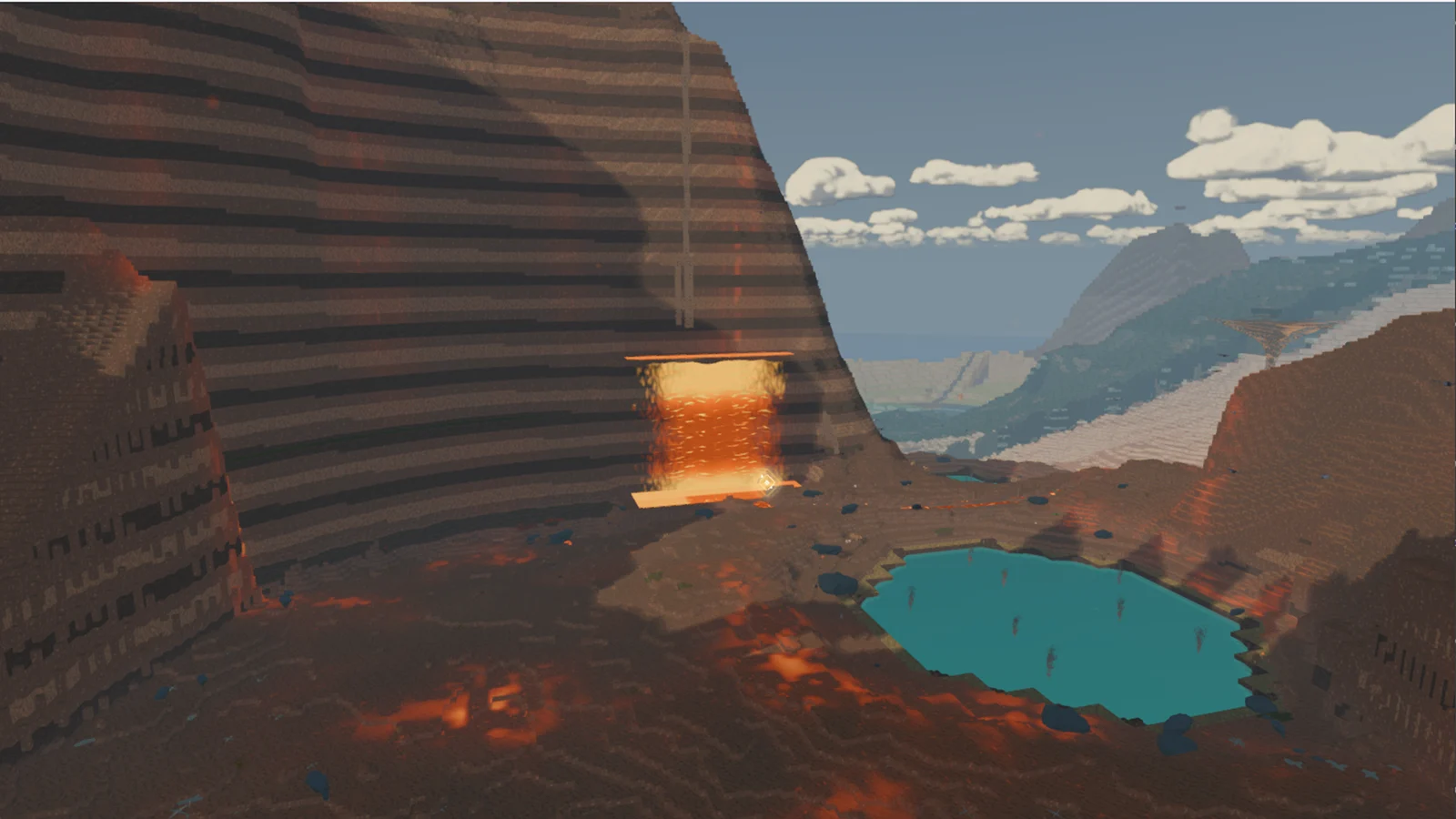
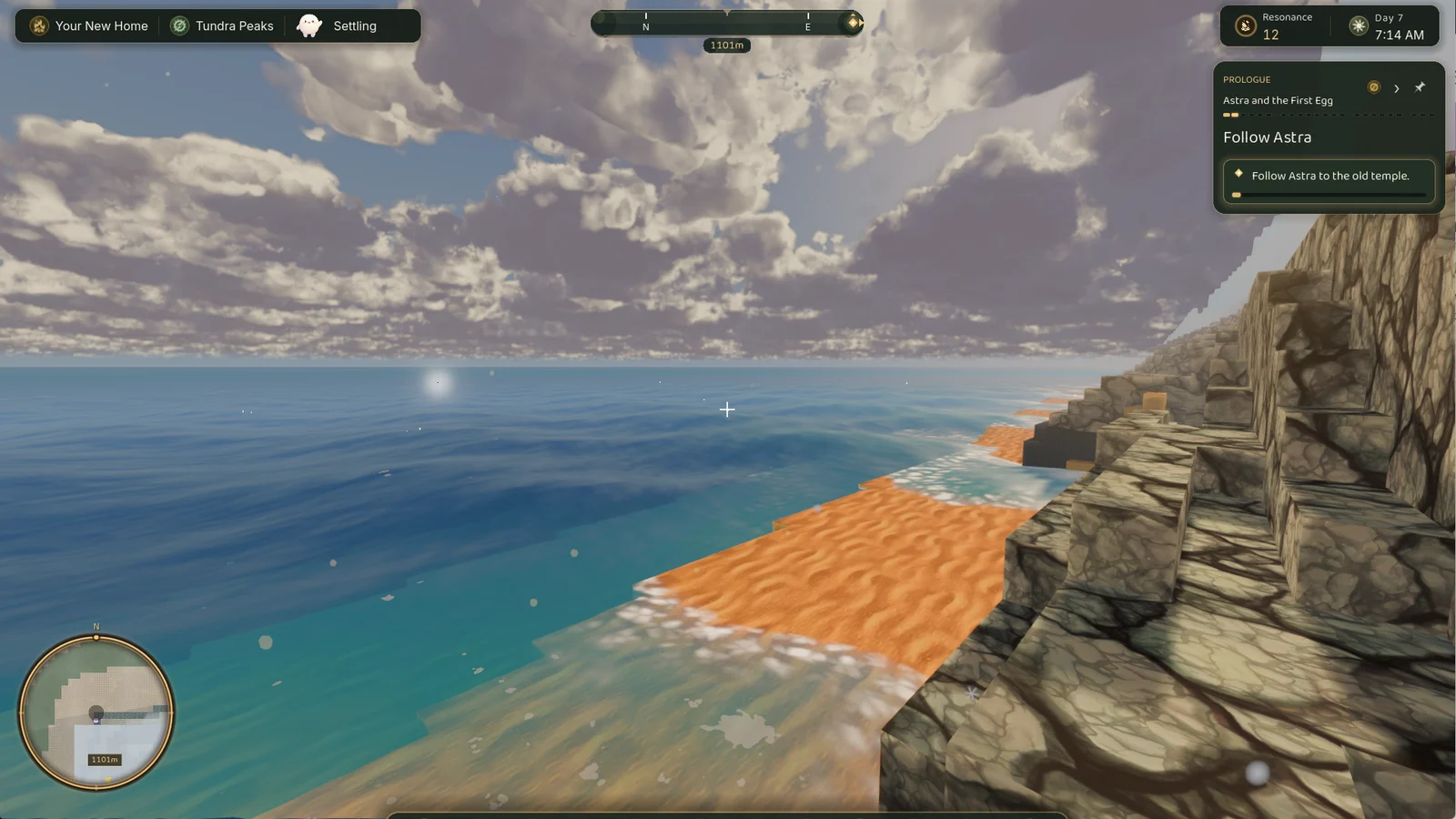
The bar we set for the boundaries: stepping from plains into grove at noon should feel like walking into a room.
What a finite world buys you
Once the world stopped being endless, a lot of things became possible that had quietly been impossible.
Landmarks work. The island has twenty-nine registered sites, and each of them is the one. When a story beat refers to the frozen temple, there is exactly one frozen temple.
The map can be honest. Ours had been quietly answering questions using the old world’s concentric-ring layout, which meant it would confidently tell you the frozen spire was in the desert. Now the sites are real records, and the fog you clear by walking persists across a save, which, embarrassingly, it didn’t before.
Discovery has a shape. A cave entrance at a hundred and twenty metres now shows up as a lit doorway with a lamp hanging in it. You see a warm point across a valley, you walk to it, and there was always something there. On an infinite map that loop is noise; on an island it is a promise.
Distance means something. “Four kilometres north” is a real journey with realms in between, not a number.
Would I do it this way again?
Yes, and earlier.
The infinite world wasn’t wasted work: most of the generator survived, and the compiled-field approach came directly out of it. But we spent a long time making the world bigger when the actual problem was that it was nowhere.
If you’re building a world for a game about belonging somewhere, don’t ask how much terrain you can generate. Ask whether a player can stand somewhere, point, and say there.
The full month is written up in Dev Log 18, including the water rewrite and the playtest that found a wall. And Dev Log 19 is about filling the island with people who were already living on it.
Nick
Luminids is a cozy colony-building sandbox built in Godot 4, coming to PC via Steam. Read what it actually is, or see why there is no combat in it.