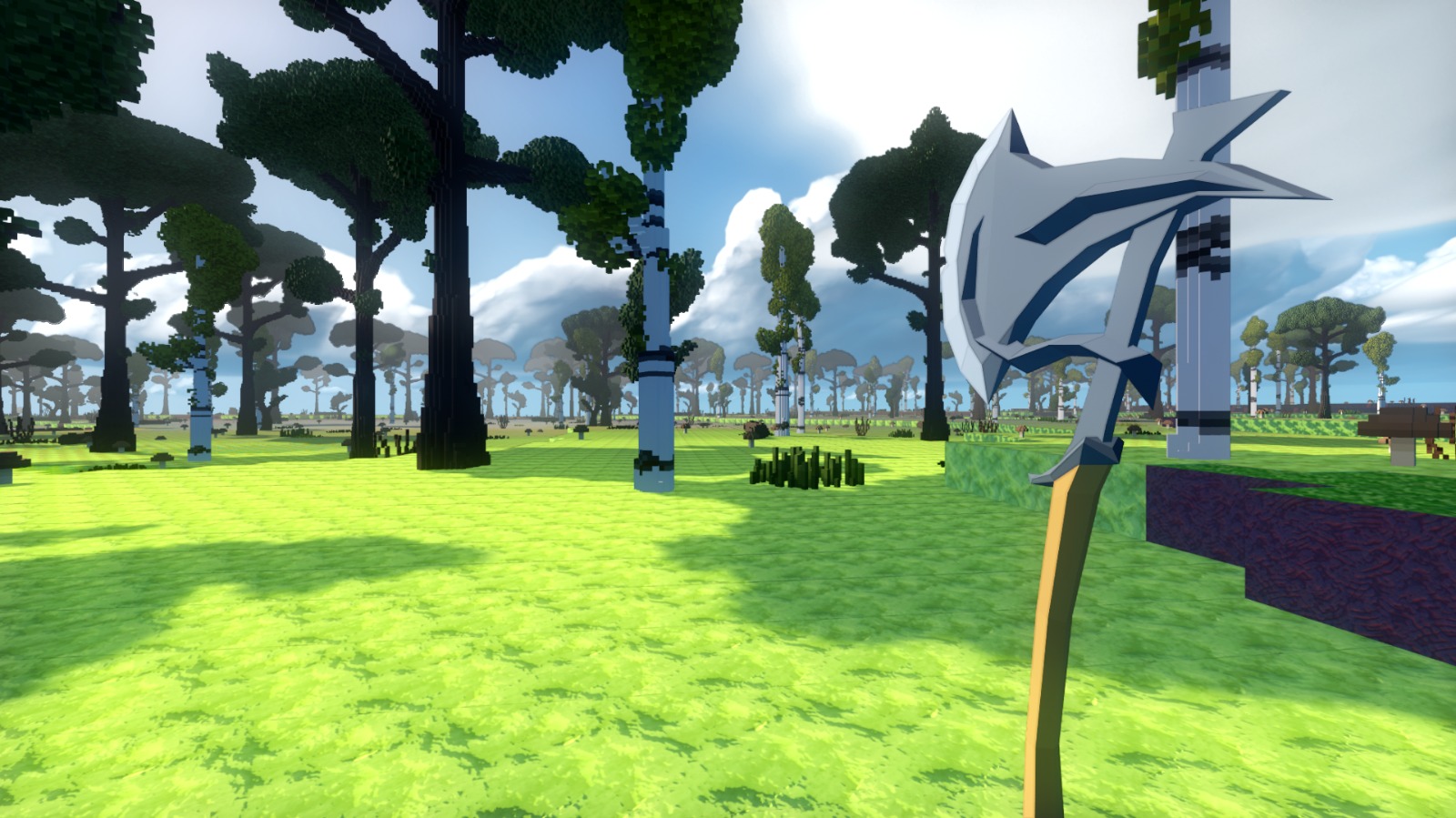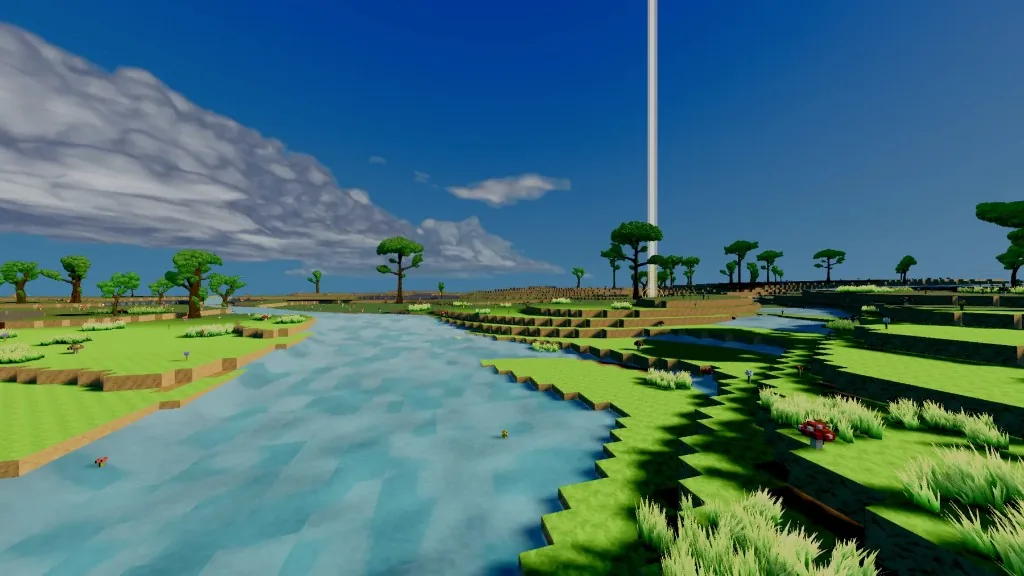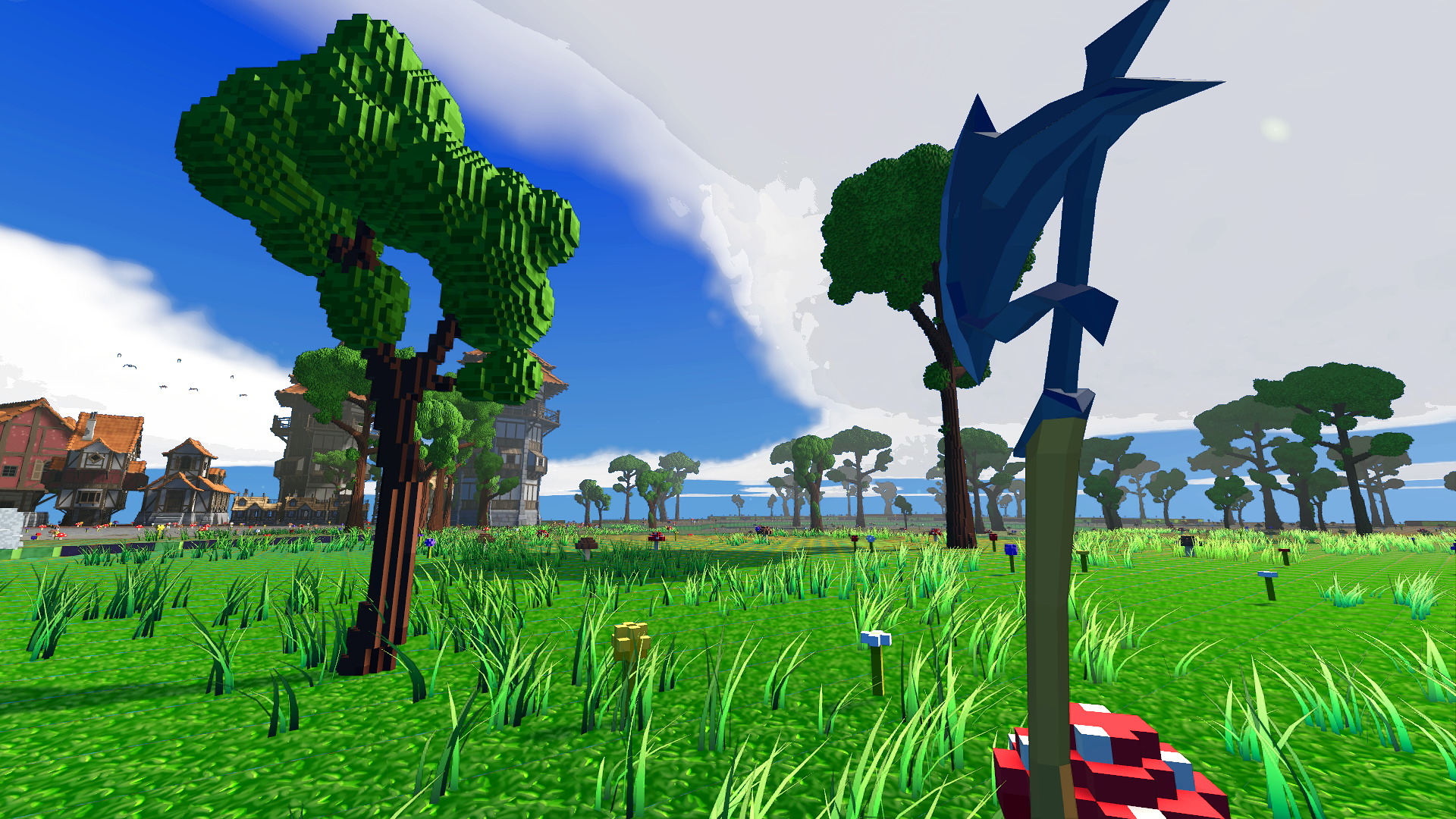


This clip shows how Luminids evolved, from a simple sphere on a grid to characters in a world that feels like a place. Over time, repeated passes on the creatures and the world slowly changed how the game felt.
The Evolution of the Luminids
From prototype entity to something that feels like a companion.
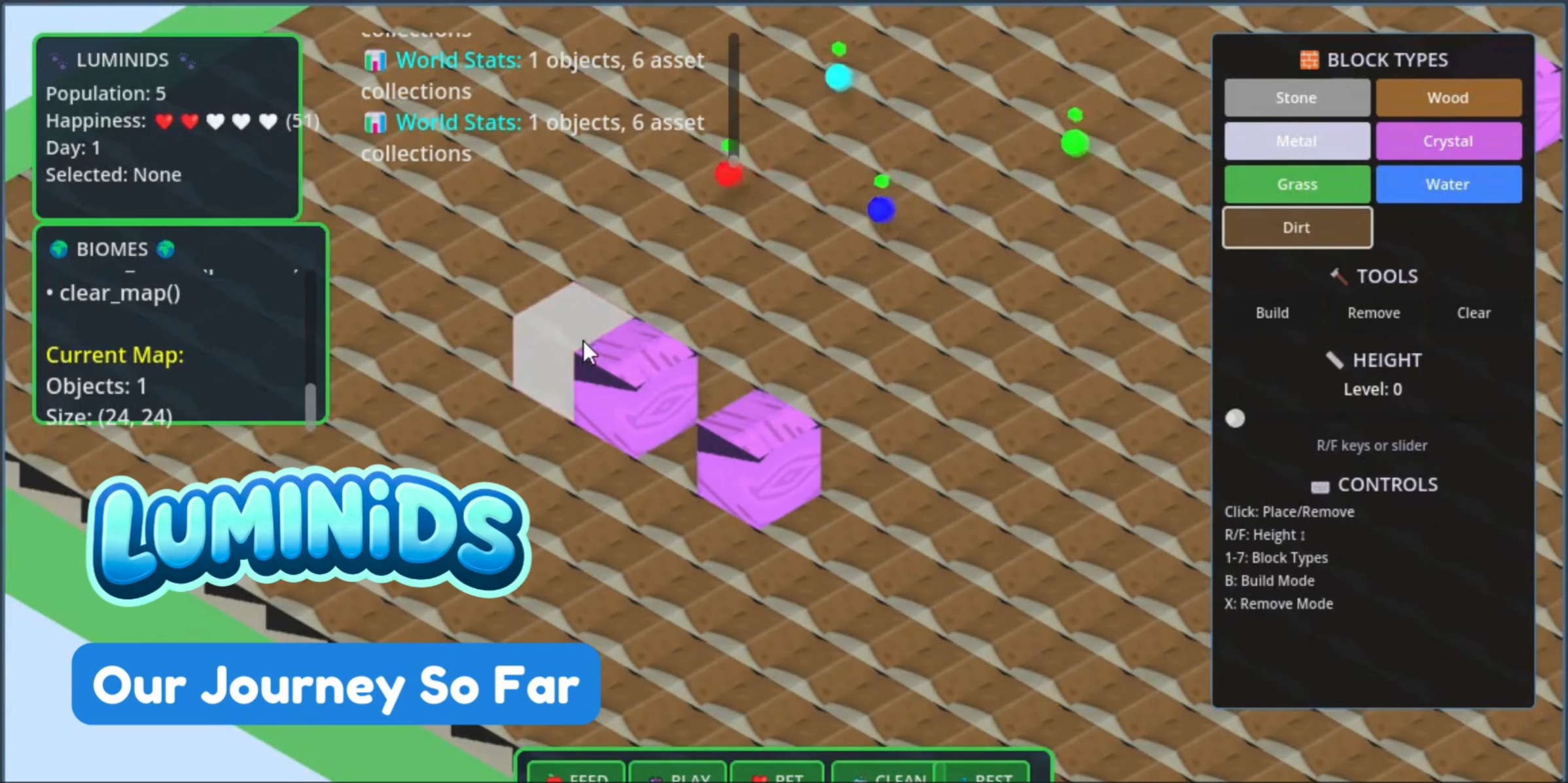
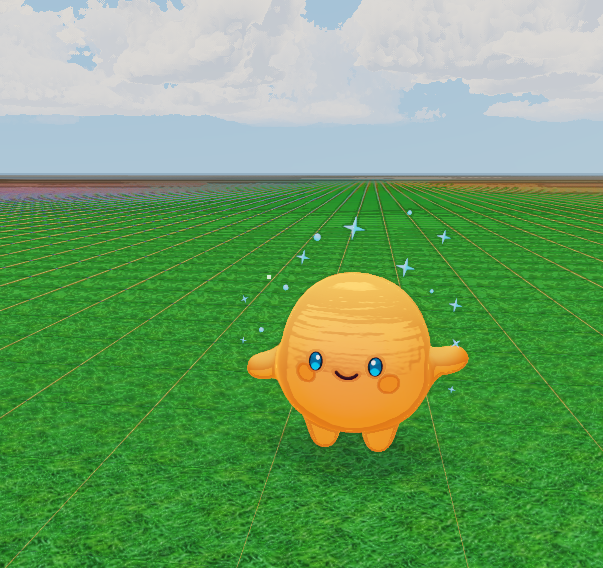
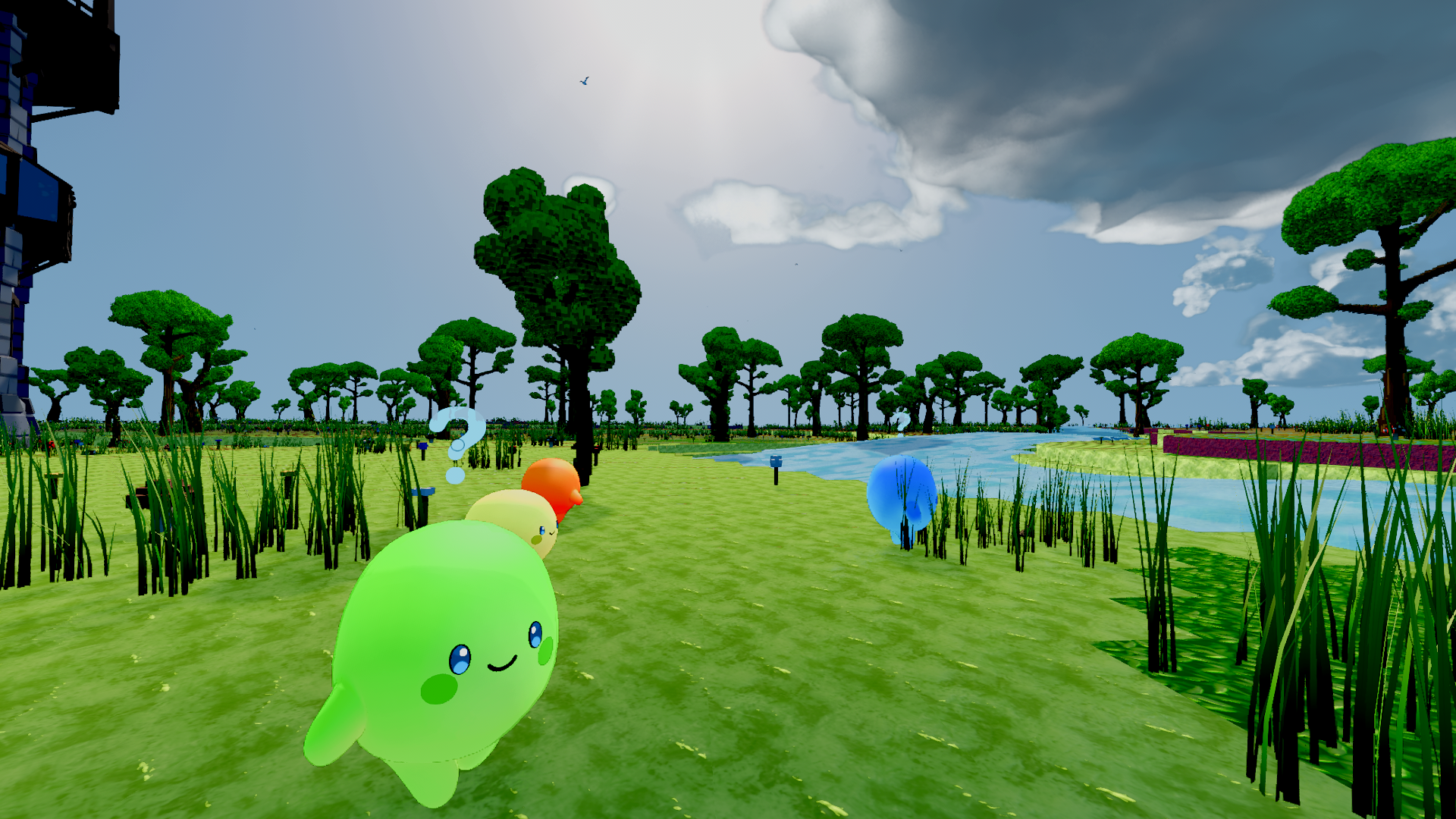
Early creature protoypes were to prove that the systems worked. From there we began our iteration.
- refining proportions
- adjusting scale so they felt grounded in the world
- smoothing animation so motion felt natural
- developing the simple faceplate that now gives them their expressions
Over time those small changes stacked up. Gradually the Luminids stopped feeling like objects and started feeling like characters. That shift changed a lot of design decisions going forward. If the Luminids were going to feel like living beings, the world around them needed to support that feeling.
The evolution of the world
From flat grid to a place with rhythm and depth.
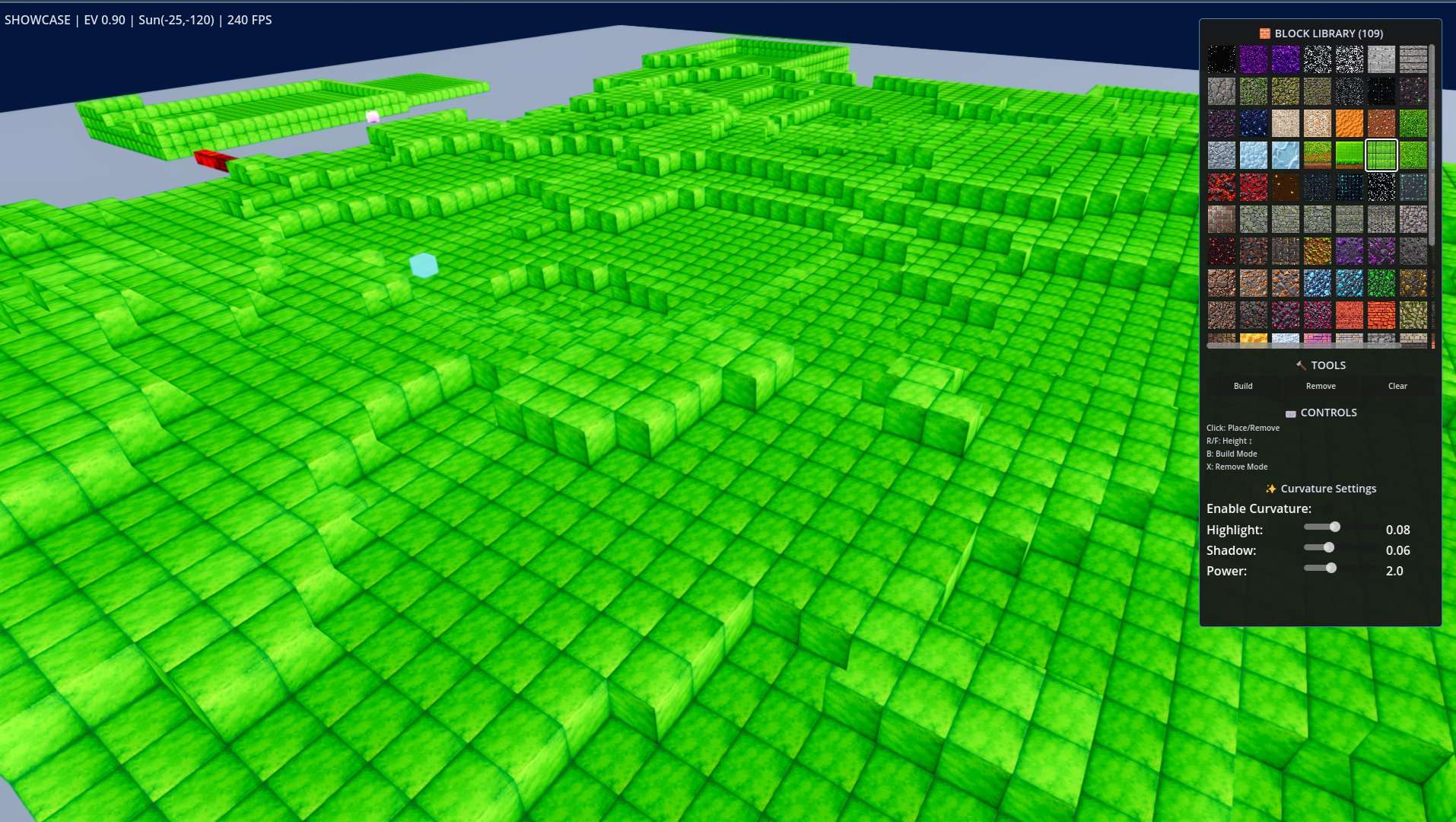
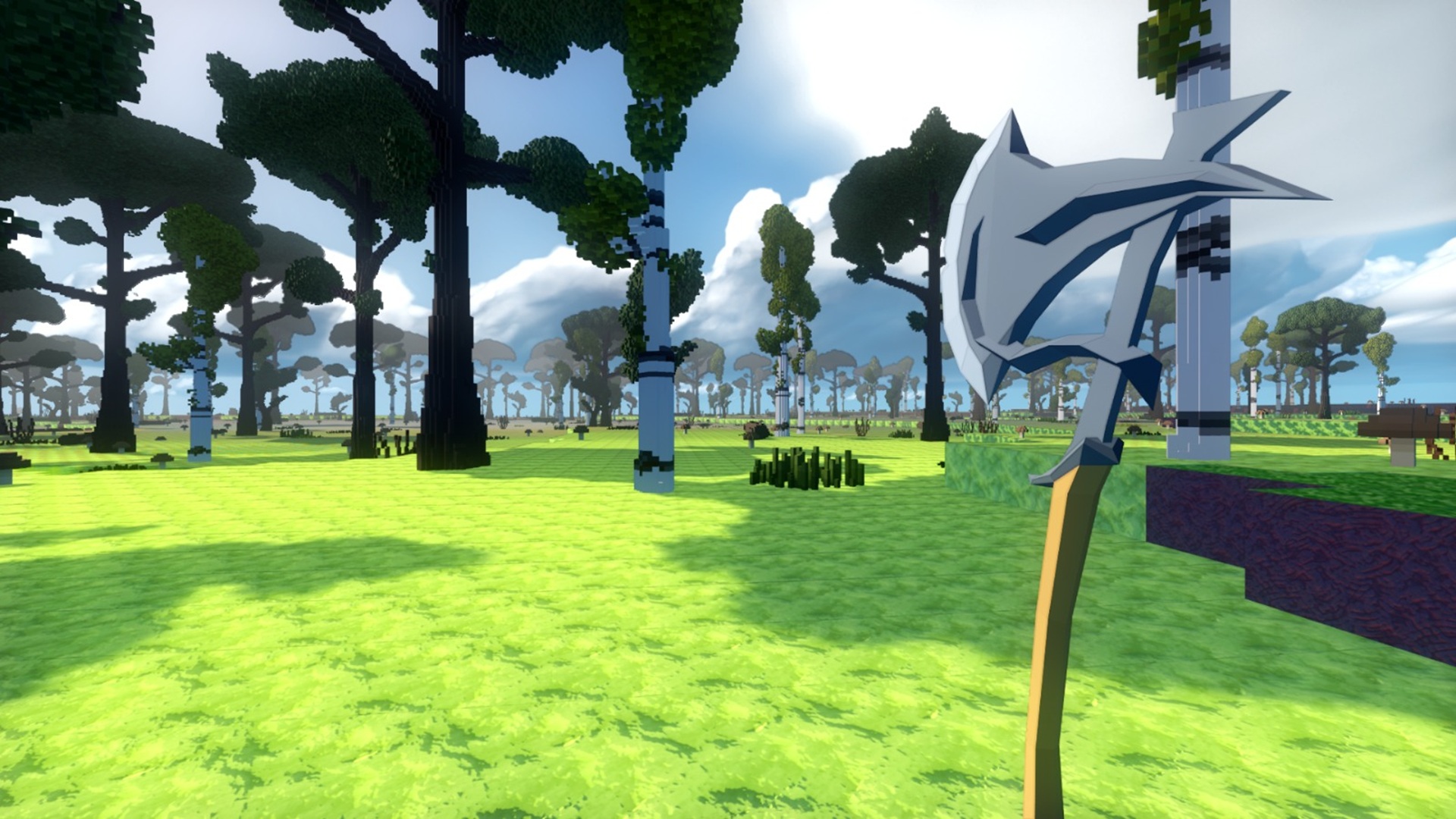
The early world was what you would expect from a prototype: flat terrain, hard edges, and lighting that made things visible. From there the development followed the same pattern as the creatures: iteration.
Terrain became more intentional. Lighting became warmer and more readable. Materials gained texture and cohesion. The camera, atmosphere, and environment all went through multiple passes until the world began to feel consistent. It started to feel like a place rather than a test environment. That distinction matters. A place invites curiosity in a way a test map never does.
Iteration is the engine
Seeing the progression laid out like this makes one thing clear: game development is mostly iteration. Most of the work was refinement, repeatedly tuning the same systems until they aligned with the feeling the game is aiming for. Small changes compound faster than big redesigns. Lighting adjustments lead to terrain tweaks, terrain tweaks change how creatures move, and creature behaviour influences how the world reads visually.
Eventually everything starts influencing everything else. That feedback loop is really the core of building Luminids.
Where things stand now
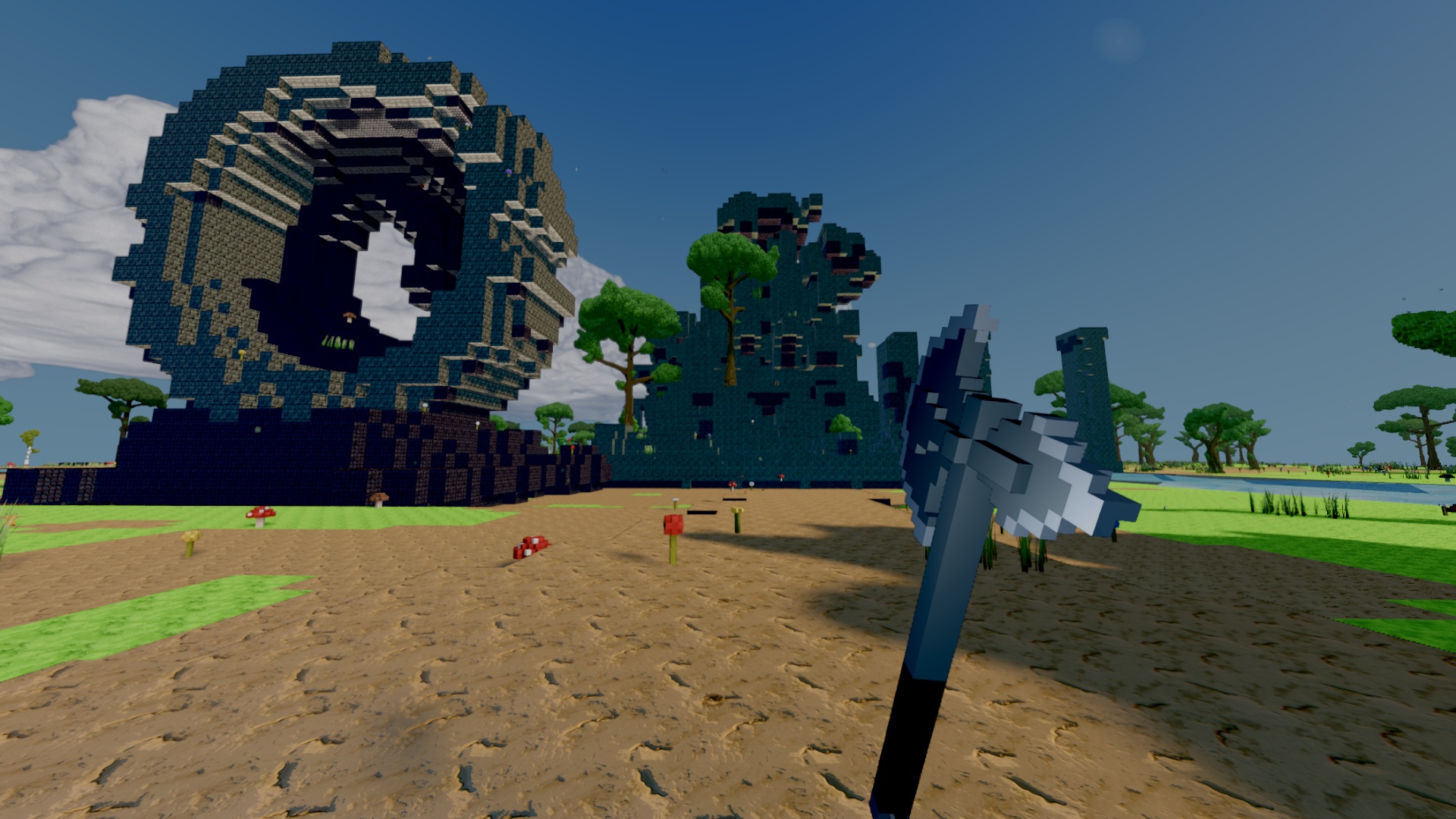
The current builds finally feel like they have a cohesive foundation. The Luminids read as individual creatures with their own tendencies. The world has shape, atmosphere, and a sense of calm that matches the vision for the game.
There is still a lot ahead: systems, content, and tuning. But the foundation is finally solid. Seeing the full evolution from early prototype to world makes that progress very tangible.
What's next
The next phase focuses on expanding what this foundation enables:
- deeper creature behaviour
- richer environments and biomes
- stronger interaction between Luminids and the world they inhabit
The goal stays the same: a world that feels alive, calm, and worth spending time in.
More soon.
Nick