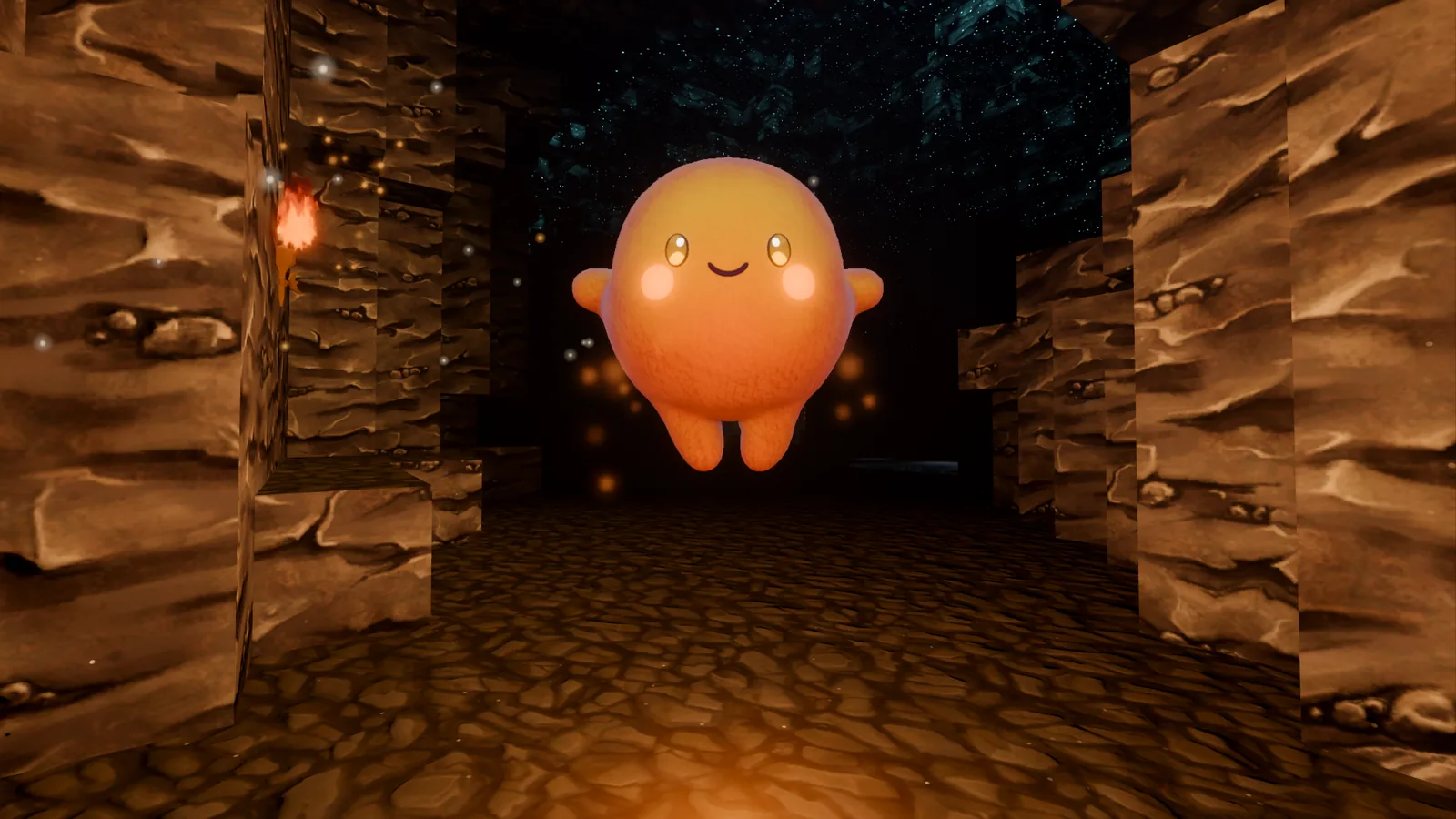


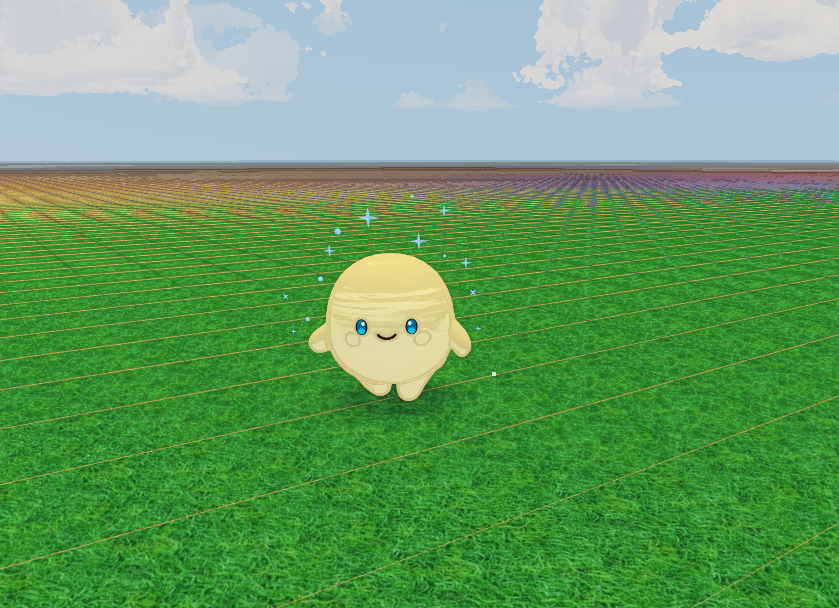
This week was all creature work: modelling, rigging, and the first animation set. It’s the first time the Luminids have felt like characters rather than placeholder blobs, and I want to write down why, because most of the reasons were smaller than I expected.
Getting the shape right
I spent the front half of the week just refining the body.
Luminids are a simple silhouette, and that’s exactly why small adjustments matter more than they would on a detailed character. There’s nothing to hide behind. A smoother head curve, a slightly wider base, shorter arms: each one noticeably changes the personality, and I couldn’t have predicted which way from looking at the model in isolation.
I was balancing four things that pull against each other:
- readable at small sizes, because most of the time you see them from a distance
- expressive in motion, because they have no facial detail to speak of
- easy to animate, because there will eventually be hundreds of them
- distinctive without adding detail
What solved it was keeping the body as a single unified mesh with soft, rounded forms. No harsh angles, no separate parts. The constraint forced better decisions than a more flexible model would have: when you can’t add geometry to fix a problem, you have to actually fix the problem.
Rigging, in Blender
Once the model was locked I moved into Blender and built a minimal rig. It only needs four things:
- head control
- spine bend
- arm flaps
- body squash and stretch
The trickiest part was deformation. The mesh is very soft and rounded, which means it dents and pinches in ugly ways under squash unless the weight painting is careful. I redid the weights more than once before the body compressed cleanly.
I also tested a few constraints for secondary motion, and this is where the biggest surprise of the week came from: a tiny rotation offset on the head, lagging slightly behind the body, is the difference between a curious creature and a robotic one. It’s almost nothing mechanically. It’s most of the personality.
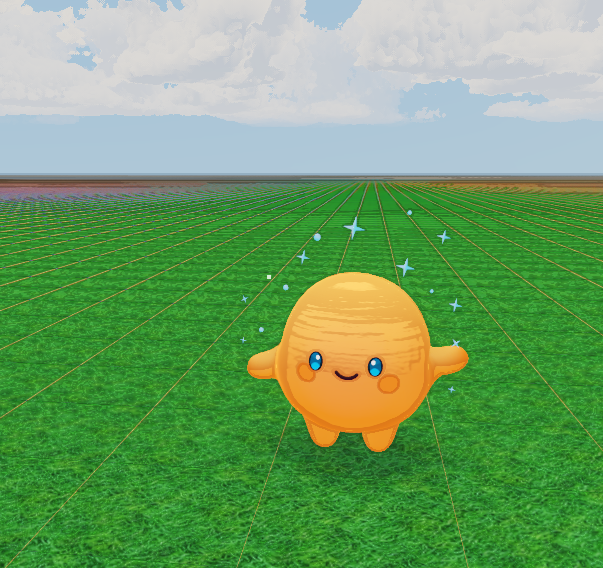
The first animation set
I built four core animations this week.
That last one matters more than its size suggests. These creatures are named after their light, so the light should be part of how they communicate, not just how they’re lit.
Putting one in the world
Dropping the first animated Luminid into the actual game world is where it clicked. With just idle and walk, the scene stopped looking static the moment something in it started moving on its own.
The thing that genuinely surprised me is how well the animations read at distance. I expected the subtlety to disappear once the creature was small on screen. It doesn’t: the squash and stretch carries even at a few pixels tall, because what you’re reading at that size is the rhythm of the motion rather than any detail of it.
That’s useful to know in a game where you’ll often be looking at a whole colony from above.
Where that leaves them
The Luminids now have a finished model, a clean rig, a basic animation set, and working in-engine imports. That’s the full pipeline, end to end, which means every future animation is an addition rather than a rebuild.
Next I want to try:
- a more expressive “surprised” reaction
- float and hover variations, so different personalities can move differently
- tighter syncing between the animation and the glow shader
- and mostly, seeing what a group of them looks like together
That last one is the real test. One Luminid is a character. I don’t know yet whether a field of them will look like a colony or just a crowd.
The behaviour underneath all this came later, and I wrote it up in Dev Log 8.
Nick